TLDR:
This industry report offers the latest market developments in AI investment and connects the dots to the rapid emergence of AI agents in healthcare and B2B marketing. It shows the benefits of AI-powered agents in planning and running campaigns, then outlines ongoing challenges in this fast-moving, ambitious market.
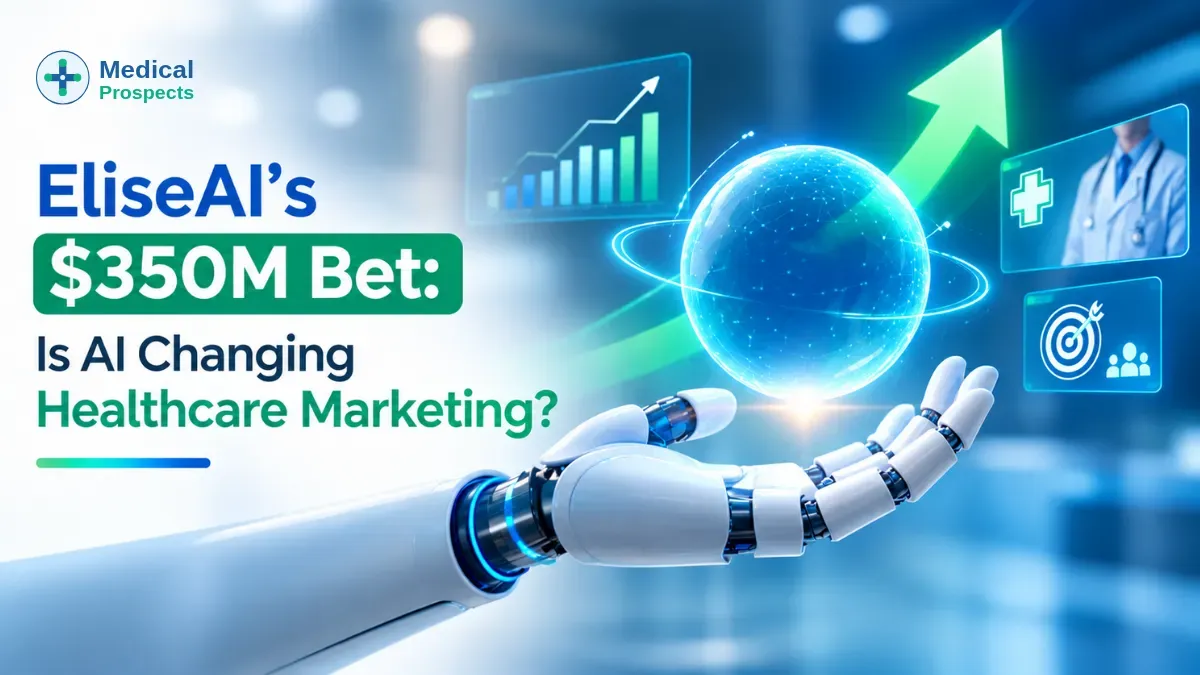
Artificial Intelligence (AI) has dominated the healthcare marketing industry, and to compete in this ambitious sector, EliseAI has raised $350 million. According to media reports, the funds will be used to expand AI-driven tools and grow its engineering, deployment, and sales teams in the North American region. EliseAI is a leading AI intelligence platform that automates administrative tasks and communications for medicare industries.
EliseAI is already taking on routine administrative work for specialty physician groups, from patient calls and referrals to scheduling, insurance verification, chart prep, and follow-ups.
Additionally, the funding round came right after the company launched Apollo, its first cross-platform agentic AI tool, a single agent that performs any task on the Elise platform.
In this market report (analysis), MedicalProspects documents:
- The role of AI agents in healthcare and marketing
- How agents are reshaping B2B vendors’ ability to plan/run campaigns.
- The key benefits they bring to targeting, efficiency, and results.
- The rapid emergence of AI across healthcare.
- A critical analysis (real challenges) in the industry amid the AI race.
- Practical tips on implementing agentic AI and investment around it.
The “new best friend”: Agentic AI in Healthcare Marketing
Healthcare marketers are reportedly using Agentic AI to monitor system signals, dynamically build target audiences, optimize finances, and coordinate actions across CRMs and customer touchpoints. Basically, these agents can extensively coordinate analysis, audience creation, planning, and approved actions.
- Today, the biggest asset in the business world is time, and honestly, everyone is trying to save those extra hours of manual labor.
- Agentic AI is emerging as a “time-saver” by streamlining intricate, multi-step decisions and thereby offering quick solutions with minimal human oversight.
- According to a leading data intelligence platform, the healthcare industry has excessively invested in AI agents, particularly for back-office purposes like prior authorization and revenue cycle management automation.
- The same platform claimed that over 85% of healthcare leaders using AI state they are confident “they have visibility into AI agent activity” and can absolutely “control and govern an autonomous agent’s actions”.
How agentic AI is changing the way B2B healthcare marketers plan and run campaigns
The new model of planning and running B2B healthcare campaigns has left static execution behind. Today’s approach is autonomous workflows that limit human interference, saving a gazillion working hours.
- Agent-built audience segments
Given a brand and its competitive landscape, agentic AI returns a segmented strategy with tiers and a priority on each, not one large audience. Marketers can see who to reach first and who comes next, then refine the groups by specialty, geography, or an existing target list. DeepIntent describes this as taking over much of the manual segmentation work, with people still reviewing the result. - Budget that follows the ranking
Once audiences are ranked, spend follows the ranking. The highest-impact audiences go to campaigns with more aggressive bidding, and lower tiers are added to meet reach goals. This replaces the guesswork of splitting a budget by hand. - Built-in medical knowledge
Healthcare marketing AI needs to know how medical conditions connect to procedures, procedures to specialties, and specialties to the prescribers behind them. It should also understand details like line of therapy, so marketers don't have to explain their own field before asking a question. That is how DeepIntent's product leader describes it. - Adjusting as the campaign runs
Marketers can test a plan before spending money, then change it while the campaign is live as new results arrive. Performance data flows back into one place, so teams can make weekly or daily changes. Anything medical or patient-facing still needs human review
Agentic AI potential advantages in targeting, efficiency, and results
- Immediate execution to draft media plan in one working session.
- Social, programmatic, and TV results in one place, with differences visible.
- One plan and one dataset for brand, agency, and analyst.
- Calculative analysis of behavioral patterns using volumes of data.
- Results measured against outcomes like prescription activity, not just clicks.
- Outputs that say what is true, what to do, and what result to expect.
- Follow-up questions from the system that surface what you should have asked.
Latest Shift Towards Agentic AI Across Healthcare
Many healthcare experts are leaning towards agentic AI to ease workflows. According to a research report by Deloitte, the healthcare segment is highlighted as shifting towards agentic AI to "help deliver outcomes across clinical, administrative, and financial domains".
The report further states that over 80% of health systems are emphasizing agentic AI for clinical operations and value-based care delivery, as well as revenue cycle management.
- Holistic care coordination: With most of the tasks being automated, the healthcare regimen will be able to offer end-to-end care coordination using AI agents. In a more elaborative meaning, AI agents will connect multiple steps such as processing, patient intake, authenticating insurance eligibility, and organizing administrative tasks (scheduling appointments and email reminders).
- Proactive, frictionless documentation: Purpose-driven AI agents run quietly in the background of doctor-patient visits, listening to natural conversation and drafting compliant, real-time clinical notes, including notes on their own. This also lightens the administrative workload, giving clinicians back valuable time to concentrate on direct patient care.
- Revenue Cycle Management: AI agents fasten the process of insurance claims, coding verification, and billing appeals autonomously. On verification, these agents verify medical codes against clinical documentation, finding mismatches before a payer can reject the claim. As the work task is largely administrative and rule-driven, it is considered a lower-risk starting point for health systems adopting agentic AI.
Not just that. But also:
- Delivery of behavioral insights to trace engagement patterns.
- Feedback/reputational-related insights to track patient satisfaction scores.
- Offering real-time diagnosis of upcoming symptoms to direct immediate care.
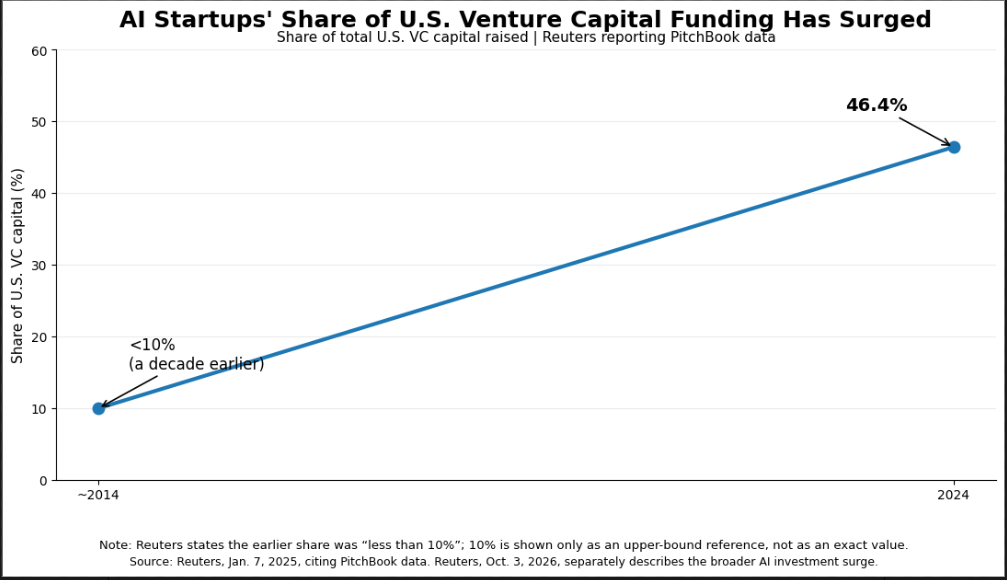
Growth of AI Investors and Why They Are Backing Vertical AI
Challenges ahead: Does agentic AI pose a threat? If yes, then what are those threats?
Yes, AI agents can pose a threat in the healthcare industry if they are not used with deligencs and, safety measures, and proper understanding. These could be in the form of:
- Potential cases of data breach
- Potential cases of cyberattacks
- Built-in biases and discrimination
- Hyperdependency may lead to loss of critical thinking
As a precuationary step against these potential dangers, there are international regulatory guidelines such as the European Union’s AI Act. It classifies AI systems by risk level and sets stricter requirements for high-risk uses, including many in healthcare, around transparency, human oversight, and data quality.
Roundabout analysis of AI gains in healthcare marketing
There is clamor in the market that AI could potentially amplify productivity. Some reports say the “productivity gain” aspect of artificial intelligence is elusive, while others assert that smart advances through AI could save up to 75% to 95% of hours.
Subsequently, there are two schools of thought. Each setting offers distinct advantages and presents its own set of challenges.
Practical tips for B2B healthcare marketing vendors amid AI race
The rapid use of agentic AI in healthcare marketing has made it to the top headlines. However, no tool can transform your business or enterprise if it is not handled with care, precautionary measures, and diligence.
MedicalProspects outlines a practical overview for healthcare marketing to make the most productive use of AI.
- Start small and rule-based: Start with low-risk tasks like audience segmentation and reporting before handing over bigger decisions.
- Make sure human intervention exists: Have a named reviewer approve anything the agent builds, especially medical or patient-facing content.
- Cross-check safeguards before purchasing: Ask vendors about data privacy, access controls, audit logs, and alignment with frameworks like the EU AI Act.
- Evaluate and test for healthcare knowledge: Check that the tool understands how conditions, procedures, specialties, and prescribers connect.
- Make sure the prompts have clean data: Verify your physician and hospital records first, since outdated lists lead to confident but wrong targeting.
- Ensure outcome results, not just clicks: Track results like prescription activity, meetings booked, or pipeline against your manual baseline.
- Keep critical thinking alive: Encourage your team to question the agent's recommendations and keep strategy decisions with people.
- Pilot before scaling. Run one campaign or segment first, review the results, then expand.

MedicalProspects Editorial
MedicalProspects Editorial covers important developments shaping healthcare, medicine, life sciences, public health, healthcare technology and the global healthcare industry.