TLDR:
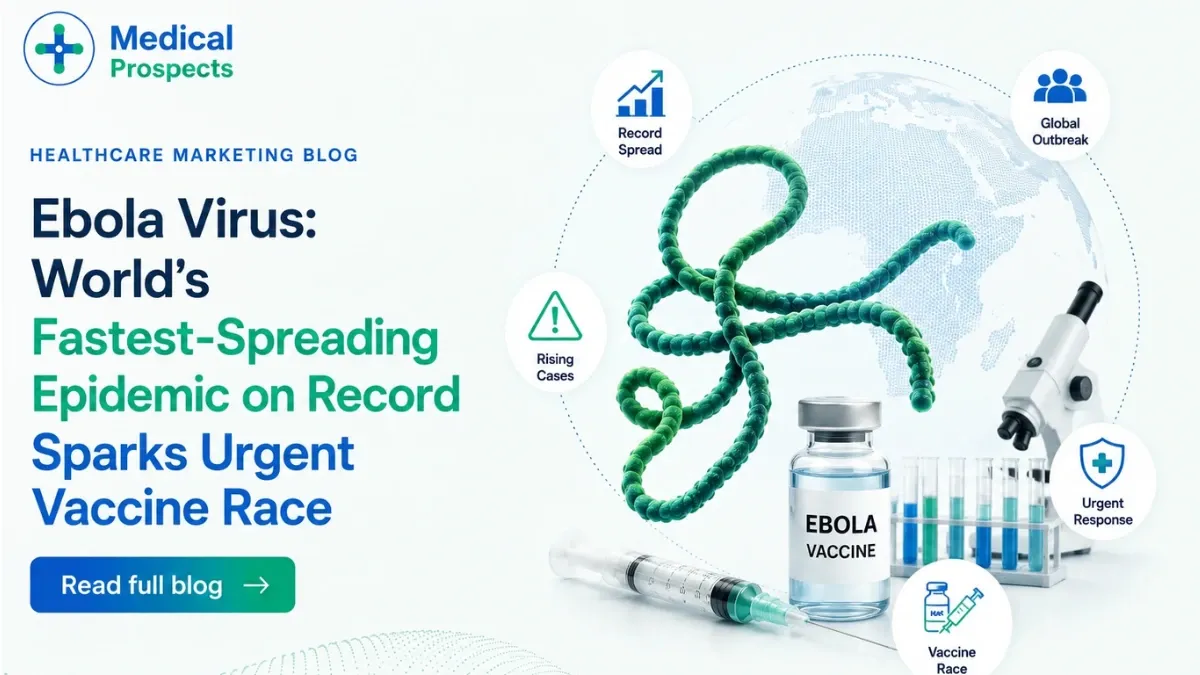
The Bundibugyo Ebola outbreak in the DRC has become the fastest-spreading epidemic on record, with 4,945 cases and 2,325 deaths reported so far. No approved vaccine exists yet for this variant, but Moderna and Oxford/Serum Institute of India have both launched first-ever human trials, backed by CEPI funding. WHO is also fast-tracking a Phase 3 trial for Merck's Ervebo vaccine to test cross-protection. Weak healthcare infrastructure, isolated location, and regional conflict continue to stall outbreak containment efforts. Global health bodies such as WHO and Africa CDC have mobilized over $450 million toward the response, even as the outbreak's scale continues to grow.
The catastrophic Ebola outbreak has reportedly confirmed 2,325 fatalities and infected 4,945 people in the Democratic Republic of the Congo (DRC).
United Nations humanitarian chief Tom Fletcher, in a press release on Friday, claimed the virus is the fastest-spreading Ebola epidemic, and warned it is "killing someone every 30 minutes”.
According to health officials, the Bundibugyo Ebola outbreak is transmitting about five times faster than former regional outbreaks, reporting 2,000 cases in nearly two months instead of ten.
The ongoing outbreak is caused by a particular strain of Ebola, known as the Bundibugyo virus, spread undetected across the region for a few months before the DRC declared the epidemic in May.
Fragile healthcare infrastructure, the region’s remote geographic landscape, and looming large conflict along the borders of South Sudan, Uganda, and Rwanda have primarily hindered the disease’s response efforts.
No approved vaccine yet for the Bundibugyo strain
Unlike the more commonly known Zaire strain, which already garnered approval for vaccines and treatments, the Bundibugyo strain does not, as it is a separate species.
While medical authorities and international collaborators are eagerly awaiting a breakthrough, none of the existing Ebola vaccines or medicines have been officially approved to treat this deadly strain.
The gap has compelled doctors and healthcare professionals to work with fewer tools to combat the Bundibugyo virus, which is another astounding reason why it is spreading at a steady rate.
Right now, researchers are racing to test new vaccines and treatments specifically for this strain, but until one is approved, precautionary care mostly focuses on supportive treatment, helping patients survive rather than directly curing the infection.
The current Ebola outbreak in 2026 has put pressure on official health authorities and their partners to expand the process of vaccines, treatments, and vigilance before the deadly strain spreads further.
Vaccine trial phase to fight Bundibugyo Ebola Outbreak underway
According to the latest report by Forbes Africa, WHO Director-General Tedros Adhanom Ghebreyesus said two vaccines primarily designed against the Bundibugyo strain have entered the Phase 1 safety trials in humans. This has happened for the first time.
The Oxford/Serum Institute of India candidate was the first to reach this milestone.
The very first volunteer received a dose on July 24, remarkably, the world's first clinical trial of a vaccine for the Bundibugyo variant, which is an unusually fast-paced eight-week progression from vaccine concept to human testing.
Separately, the World Health Organization (WHO) is also pushing to fast-track a larger Phase 3 trial using a different vaccine by Merck named Ervebo, which is already approved for the Zaire Ebola strain.
The vaccine was approved for use in people aged 18 years of age and older. Rather than being developed from scratch, Ervebo is being tested to see whether it has the capability to offer cross-protection against the Bundibugyo variant.
Who’s developing a vaccine for Bundibugyo Ebola outbreak? Here’s a closer look.
1. University of Oxford + Serum Institute of India (SII)
The program is supported by the Coalition for Epidemic Preparedness Innovations (CEPI), which has committed $8.6 million to fund the vaccine program.
SII has manufactured the vaccine and built a stockpile of almost 620,000 doses that can be deployed if needed in the ongoing epidemic threat. Oxford is also preparing additional trials in Uganda.
These trials will be conducted in partnership with the Medical Research Council/Uganda Virus Research Institute and the London School of Hygiene and Tropical Medicine.
2. Moderna
Moderna began its first human trial of mRNA-1469, using the same mRNA platform as its COVID-19 vaccine. The trial spans three sites in Canada and is expected to enroll about 80 healthy adults, authorized by Health Canada.
The program is backed by CEPI, which has committed up to $50 million toward preclinical work and the Phase 1 trial, plus scaled manufacturing support intended to accelerate a possible move into Phase 2 and Phase 3 trials.
There is a catch: even as the trial moves forward, there is a pragmatic hurdle: Moderna's mRNA platform requires cold-chain storage, which currently limits its ability to reach the outbreak's epicenter in Ituri Province directly, a logistical challenge separate from the trial itself.
3. Merck
The maker of Ervebo, already approved for the Zaire Ebola variant, is now being proposed as the first candidate for a Phase 3 trial testing cross-protection against Bundibugyo.
Ervebo was originally developed and tested through ring vaccination during the 2014-16 West African epidemic and has since been used successfully in multiple DRC outbreaks of the Zaire strain.
According to a report by StatNews, a WHO expert advisory panel was initially reluctant to recommend Ervebo for this purpose. However, the growing evidence from animal and human studies persuaded them that the vaccine may offer partial cross-protection to fight the Bundibugyo strain in Congo.
For clinical research teams and pharmaceutical manufacturers, the mobilization highlights the critical role of agile vaccine developers, contract research organizations (CROs), and pharmaceutical manufacturers working in rapid coordination.
Coordinated Global Action: WHO, Africa CDC, and others rally resources to grapple with outbreak containment
Beyond vaccine trials, WHO and Africa CDC have led joint missions across the DRC and Uganda, pushing for faster detection and contact tracing.
Their focus remains on getting resources to affected communities as quickly as possible.
More than $450 million has been mobilized so far from African states and international partners. Additional US funding has also been pledged to support the response.
Officials say stronger cross-border coordination is still needed to bring the outbreak under control. Lessons from Uganda's successful containment are now shaping the response in the DRC.
Bundibugyo Ebola Virus Symptoms: What Health Officials Want the Public to Know
Like other variants of Ebola, the Bundibugyo virus causes a severe and often fatal illness. Recognizing its symptoms early can be critical to receiving timely care and saving lives. Here are the symptoms of the Bundibugyo Ebola virus:
Source: Africa Centre For Disease Control and Prevention
Final Thoughts
The Bundibugyo Ebola outbreak has been termed one of the fastest-spreading epidemics in the African region, particularly due to the uncontrolled movement of people, mainly those who are already diagnosed with the virus, between vicinities that are already affected and other neighboring areas.
The Africa Centres for Disease Control and Prevention (Africa CDC), the official public health organization in the region, reportedly said it is supporting the ongoing crisis through patient care, surveillance, clinical analysis, infection prevention, and overall care engagement.
While the vaccine is still in its trial phase, the virus has spread to more people than was expected.
Meanwhile, researchers race toward a breakthrough; the Ebola Bundibugyo strain is a grim reminder of why sustained investment in vaccine development, healthcare infrastructure, and cross-border coordination matters, not just for this crisis, but for the next one.

MedicalProspects Editorial
MedicalProspects Editorial covers important developments shaping healthcare, medicine, life sciences, public health, healthcare technology and the global healthcare industry.