Beyond Publications: Rethinking How Pharma Identifies Clinical Influencers

VP of Marketing, MedicalProspects
October 6, 2026

TLDR
Pharma has long identified clinical influencers by publications, titles, and specialty, but these only show who is visible, not who actually shapes clinical decisions. A more complete view of KOL influence combines five signals: clinical relevance, peer influence, professional reach, digital influence, and real-world experience. No single signal tells the whole story, so Medical Affairs and commercial teams should evaluate them together to build stronger HCP networks and prioritize more meaningful engagement.
Over the years, pharmaceutical organizations have heavily relied on a conventional set of parameters to identify clinical influencers. These individuals may be recognized as academic experts, medical specialists, or highly published healthcare professionals (HCPs). However, this approach has largely focused on external and traditional indicators of visibility and credibility.
Nonetheless, it often overlooks other ways physicians and healthcare professionals (HCPs) may be demonstrating meaningful influence within the industry. Someone may not have been published in the largest media house or the most visible academic peer-reviewed journal but may still play a significant role in shaping clinical conversations, treatment decisions, or peer behavior.
That's why the way pharma identifies clinical influencers needs to evolve. Historically, the focus has been on identifying who is visible. Today’s healthcare ecosystem demands urgency, diligence, and a more comprehensive approach to identifying the key opinion leaders (KOLs) who shape decisions. For pharmaceutical medical affairs and commercial teams, this transitional shift is particularly important.
Takeaway: Identifying the right KOLs can influence everything. This can be in the form of scientific engagement, advisory boards, product launches, clinical education, and treatment understanding across therapeutic areas.
Where is the next generation of clinical influence taking shape?
Clinical influence is no longer restricted to medical journals, congress podiums, or citation counts.
Today, digital activity can reveal forms of professional influence that traditional insights may miss.
Some physicians are building highly engaged professional audiences on social media platforms such as Instagram.
According to the peer-reviewed study of 1,281 physicians, 31.8% were already using Instagram to post professional content, with usage rising to 47.7% among physicians in private practice.
For pharma, the interesting point isn't that clinicians are on Instagram.
Takeaway: It's that these physicians are using the social media platform to educate peers, evaluate evidence, discuss clinical practice, build professional communities, and deliver digestible medical topics to audiences.
That makes their digital presence potentially relevant to KOL identification.
These new digital tactics allow pharma marketing squads to add a layer of intelligence to the process.
How?
Digital engagement can help reveal clinicians who are actively educating peers, participating in therapeutic-area conversations, or influencing how emerging evidence is interpreted.
This can be particularly valuable when building KOL audiences for a specific therapeutic area.
A clinician's specialty, institution, research activity, professional network, and digital engagement can collectively provide a more complete picture of their potential influence. For pharma teams looking to identify and reach relevant healthcare professionals using a more comprehensive audience strategy, connect with MedicalProspects.
The overlooked signals that indicate meaningful clinical influence
A patient constantly misses follow-up appointments due to financial burdens, transportation challenges, or other socioeconomic hurdles.
A clinician’s impact can also be shaped by factors that sit outside traditional measures of expertise.
This includes patient adherence, socioeconomic circumstances, access to care, continuity of treatment, and referral patterns.
The clinical influence does not exist in isolation from the realities of patient care.
For instance, let us consider a case of patient adherence. It may appear to be a purely clinical consideration, but the reasons behind poor adherence can arise from well beyond treatment itself.
These factors can influence how clinicians approach medical treatment, patients’ communication, and ultimately shape clinical decisions.
For pharma teams, this distinction matters. Identifying clinical influencers solely through publications, titles, or specialty can overlook the clinicians whose experience gives them a deeper understanding of these real-world barriers.
The stronger approach is to evaluate clinical expertise alongside the contextual signals that reveal how a clinician actually operates within the healthcare ecosystem.
This broader view can help pharma identify not only who is recognized for their expertise, but who has meaningful influence over how care is understood, discussed, and delivered.
Beyond visibility: What makes a KOL truly influential in pharma marketing?
A physician may have an impressive publication record but limited engagement with peers outside their medical institutions.
Another may have fewer publications but play an active role in therapeutic-area discussions, educate other clinicians, participate in professional networks, and influence how emerging evidence is understood.
In the pharmaceutical industry, visibility can tell you that a clinician is known. It does not necessarily tell you how 'influential' that clinician is.
For those in the pharmaceutical segment, this distinction matters. KOL identification should not simply answer “Who is recognized?” It should also answer “Who has meaningful influence within the clinical communities that matter to us?”
That requires looking at multiple signals together. The following are multiple signals that tell us exactly this.
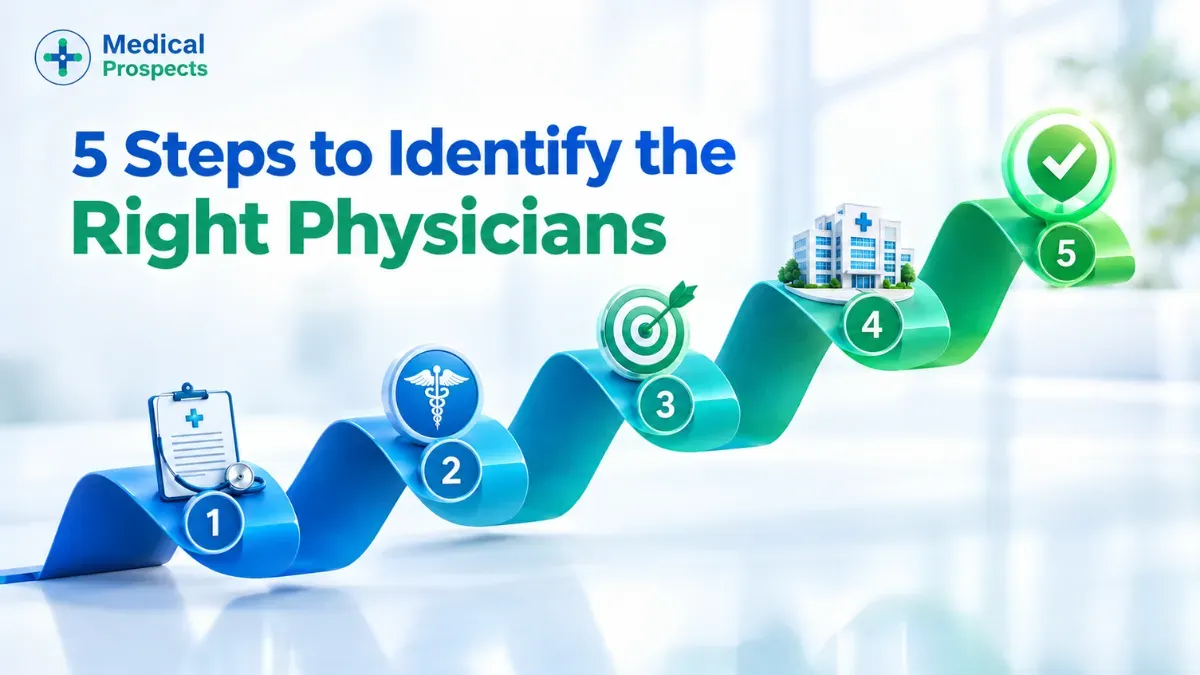
Here are the 5 Signals of genuine clinical influence
A framework for evaluating KOLs beyond publication count.
| Signal | What to Evaluate | What It Reveals |
|---|---|---|
| Clinical Relevance | Does the physician actively practice within the therapeutic area, specialty, or patient population relevant to the engagement? | Grounds influence in real clinical context, not just credentials |
| Peer Influence | Do other healthcare professionals engage with their expertise, collaborate with them, or look to them for clinical perspectives? | Signals trust conferred by fellow clinicians, not just visibility |
| Professional Reach | Does their influence extend beyond their immediate institution through research, education, professional networks, advisory activity, or other forms of clinical engagement? | Shows whether influence travels beyond a single hospital or department |
| Digital Influence | Are they using professional social platforms to educate peers, discuss evidence, or participate in meaningful therapeutic conversations? | Captures modern, fast-moving forms of engagement traditional metrics miss |
| Real-World Experience | Do they have firsthand experience with the patient populations, treatment challenges, access barriers, or care pathways relevant to the therapy? | Reflects practical, ground-level understanding beyond academic output |
None of these signals should be viewed in isolation.
Takeaway: A strong publication record demonstrates expertise. Digital engagement may demonstrate reach. Peer networks can reveal professional influence. Clinical experience can provide context.
Final Thoughts
The future of KOL identification isn't about moving away from publications, credentials, or traditional measures of expertise. It's about putting them into the right and existing context.
Clinical influence is reflected not only in what clinicians publish, but also in how they contribute to conversations, education, and clinical practice.
For pharma companies, it is important to comprehensively understand who is influential, where that influence exists, and why it matters to a specific therapeutic area.
A more comprehensive approach to KOL identification can help Medical Affairs and commercial teams build stronger HCP networks, prioritize meaningful engagement, and recognize influential voices that traditional methods may overlook.
Finding the physicians who truly shape clinical decisions starts with the right data. See how MedicalProspects can help your team build smarter, more targeted KOL outreach.
Identify & Reach Your Clinical Influencers
Build smarter, more targeted KOL outreach strategies with verified healthcare professional data.
Connect with MedicalProspects →Frequently Asked Questions (FAQs)
Q:
How do pharmaceutical companies actually identify KOLs today?
Most pharma companies use a multi-source approach rather than relying on one metric. Publication history is combined with clinical trial involvement, conference speaking, prescribing patterns, guideline participation, and digital presence. These signals are often brought together in KOL management platforms to build a more complete picture of influence.
Q:
What does "KOL identification beyond publications" actually look like in practice?
It means looking beyond who publishes the most to understand who actually influences clinical decisions. Pharma teams may consider advisory board participation, institutional roles, conference activity, trade media visibility, and influence over treatment protocols or formularies.
Q:
How can clinical influence be measured beyond citation counts?
Clinical influence can be assessed through professional networks and behavioral signals. Referral relationships, co-authorship networks, speaking activity, guideline participation, and engagement with medical education platforms can all provide insight into the extent of a physician's trust and influence among peers.
Q:
How do digital opinion leaders influence healthcare decisions differently from traditional KOLs?
Digital opinion leaders build influence through platforms such as LinkedIn, physician networks, podcasts, webinars, and other online channels. Unlike traditional KOLs, their influence can develop and spread quickly, making signals such as engagement, reach, and share of voice increasingly relevant.
Q:
What's the most reliable way to map physician influence networks?
The strongest approach combines structured and unstructured data. Referral patterns, co-authorship, prescribing networks, conference participation, advisory roles, and media activity can be analyzed together to understand how influence moves between physicians and institutions.
Q:
How do you evaluate whether a physician is genuinely influential, not just prominent?
Prominence doesn't always translate into influence. A strong evaluation looks beyond credentials and publication volume to consider whether a physician's opinions, research, or recommendations actually affect clinical behavior, prescribing, or treatment adoption over time.
John Britton
VP of Marketing, MedicalProspects
John works with healthcare sales and marketing teams on precision targeting, campaign strategy, and audience intelligence solutions at MedicalProspects.
Related Insights