What is technographic data?
Also called: technology install data, installed base data, tech stack data, healthcare technology intelligence
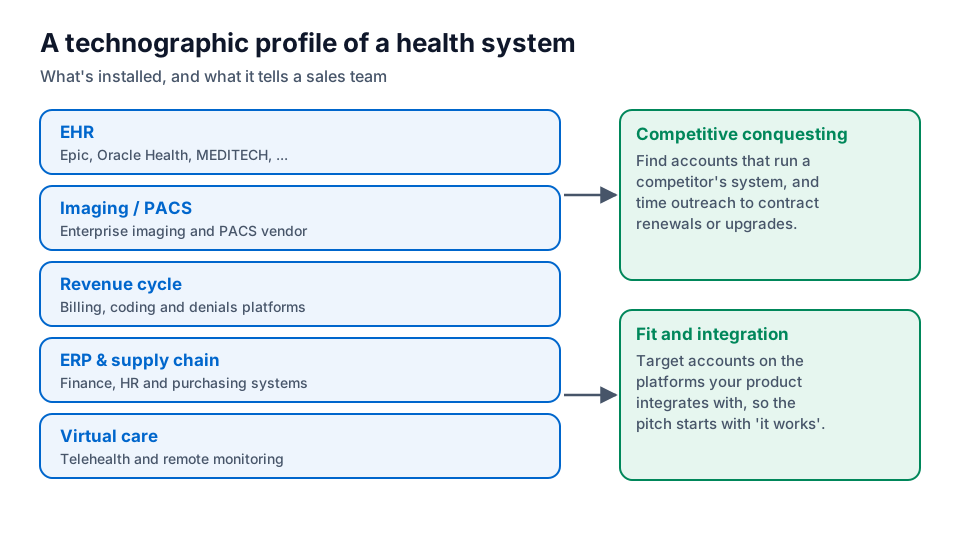
Technographic data describes the technology an organization uses, such as a hospital's EHR, imaging, revenue cycle and ERP systems. Healthcare sales teams use it to find accounts that run a competitor's product or a platform their own product works with.
Why it matters for healthcare sales and marketing
In health IT and many device categories, what an account already runs shapes what it can buy next. Technographic data supports two common plays:
- Competitive conquesting. Find hospitals and practices that run a competitor's product, and time outreach to contract renewals, upgrades or known frustrations.
- Integration-led selling. Target accounts on the platforms your product integrates with, so the pitch starts with "it works with what you have".
It also helps qualification: an account on an incompatible system may not be a prospect at all.
How it works
A healthcare technographic profile typically covers:
- EHR vendor and, ideally, which modules are live.
- Imaging and PACS systems.
- Revenue cycle: billing, coding, claims and denial management platforms.
- ERP and supply chain: finance, HR and purchasing systems.
- Virtual care: telehealth and remote monitoring platforms.
Data providers compile this from sources such as public announcements, job postings that name systems, vendor customer references, integration directories and direct research. Public data on EHR adoption in hospitals, such as the federal health IT dashboards, gives useful context but not account-level detail.
Example
Illustrative scenario. A company selling an add-on scheduling tool built for one EHR platform builds its target list from hospitals and clinics that run that EHR. Within that group, it prioritizes accounts that went live recently, since they are still optimizing workflows, and reaches the CMIO, the clinical informatics team and the department leaders who feel the scheduling pain.
Common mistakes
- Equating "installed" with "happy" or "unhappy". Technographics show what is installed, not how well it works. Pair it with intent or conversations.
- Stopping at the vendor name. Module-level detail (which parts of a platform are live) often matters more than the vendor.
- Using stale data after a migration. Health systems replace major platforms on long cycles, and records lag behind go-lives.
- Ignoring the system level. Many IDNs standardize technology across hospitals, so the decision may sit at the system, not the facility.
How MedicalProspects does it
MedicalProspects offers healthcare technology intelligence as an add-on, and sells ready-made lists of technology users, such as Epic, Oracle Health (Cerner), MEDITECH and athenahealth users.
Related terms
Put it to work
- Epic EHR users list: contacts at organizations running Epic
- HealthTech and EHR migrations use case: technology-led targeting
- Why a health system's technology changes your sales strategy: a longer guide
Sources
- Health IT Dashboard, Assistant Secretary for Technology Policy / ONC