What is a spam trap?
Also called: honeypot email, pristine spam trap, recycled spam trap
A spam trap is an email address used by mailbox providers and blocklist operators to catch senders with poor list practices. It belongs to no real person who signed up, so any email it receives signals that the sender's list wasn't collected or maintained properly.
Why it matters for healthcare sales and marketing
Hitting spam traps can damage your sender reputation or get your domain blocklisted, hurting every campaign. Old, scraped or unverified lists are the usual source.
How it works
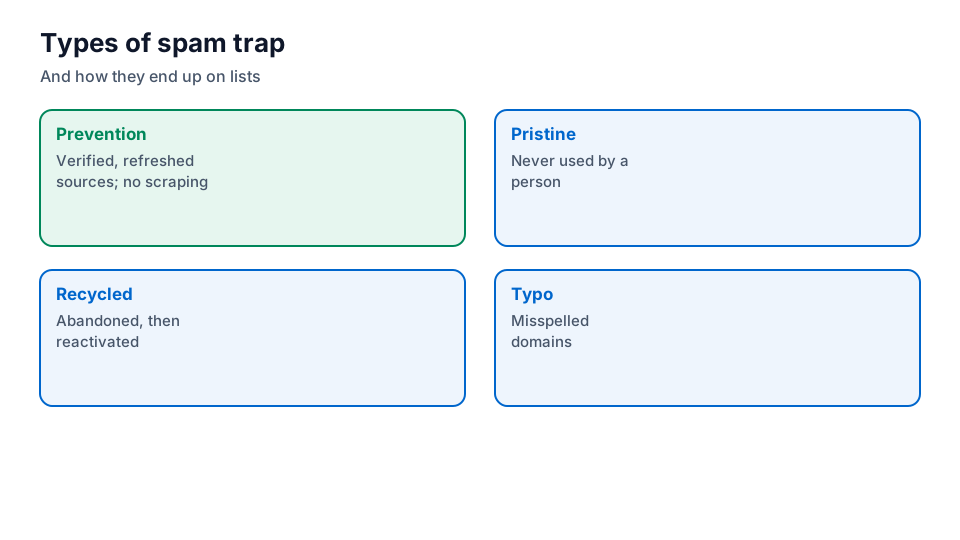
- Pristine traps: addresses that were never used by a person, often placed where scrapers will find them.
- Recycled traps: abandoned addresses that a provider has reactivated to catch senders still mailing them.
- Typo traps: misspelled domains that catch carelessly collected addresses.
Prevention: buy from sources that verify and refresh data, remove long-inactive contacts, and never scrape addresses.
Example
Illustrative scenario. A company emails a purchased spreadsheet of "all doctors" that turns out to be years old. Its domain lands on a blocklist after hitting recycled traps. It moves to a verified, refreshed list and cleans out contacts that hadn't engaged in over a year.
Common mistakes
- Using scraped or very old lists. They're full of traps.
- Mailing long-inactive contacts forever. Abandoned addresses can become traps.
- Thinking verification catches every trap. Some traps look valid; list sourcing matters most.
Related terms
Put it to work
- Sender reputation, explained: why traps matter
- How to buy healthcare contact data: why free lists are risky
- Data quality methodology: how we refresh data