What is an email suppression list?
Also called: do-not-email list, opt-out list
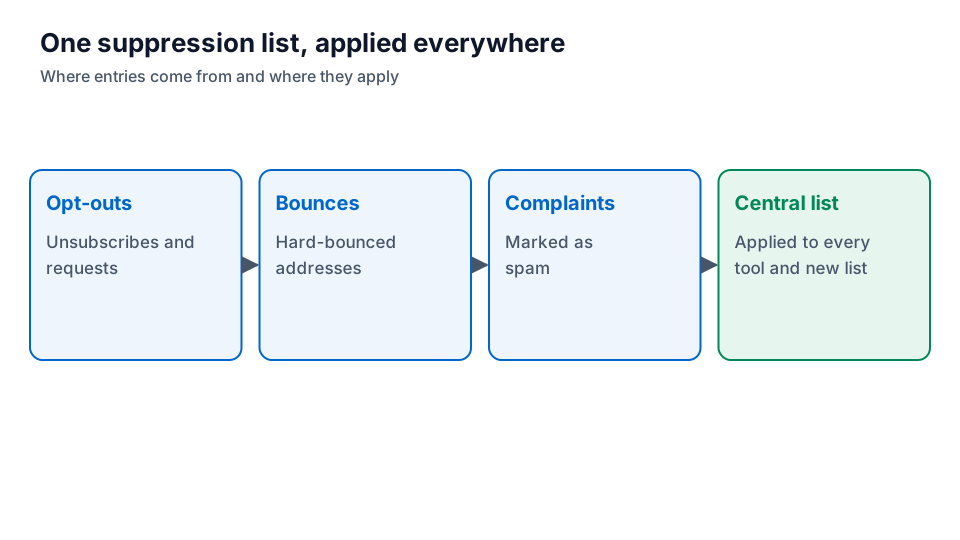
A suppression list is the set of email addresses you must never send to, such as people who unsubscribed, addresses that hard-bounced and people who marked your email as spam. It should apply across every tool and campaign you send from.
Why it matters for healthcare sales and marketing
Honoring opt-outs is required by CAN-SPAM and similar laws, and mailing bounced or complaining addresses damages your reputation. Most failures happen when opt-outs live in one tool but another tool keeps sending.
How it works
- Include: unsubscribes, hard bounces, spam complaints, and anyone who asked not to be contacted.
- Apply everywhere: CRM, marketing automation, sales engagement and any agency sending for you.
- Apply to new lists: suppress every purchased or imported list before the first send.
- Don't sell or share opt-outs except to make sure they are honored.
Example
Illustrative scenario. Before loading a new list of hospital executives, a Marketing Ops manager runs it against the company's central suppression list. Several hundred contacts who had previously opted out are removed before any email goes out.
Common mistakes
- One suppression list per tool. Centralize it.
- Forgetting agencies and partners. They must apply your suppressions too.
- Not suppressing new lists. Purchased data can include people who opted out before.
How MedicalProspects does it
MedicalProspects can apply your suppression file before delivery, so opted-out contacts and current customers are removed from your list.
Related terms
Put it to work
- Compliance questions in our FAQ: short answers on email rules
- CAN-SPAM Act, explained: the opt-out rules
- Ask about suppression: remove opt-outs before delivery
Sources
- CAN-SPAM Act: A Compliance Guide for Business, Federal Trade Commission