How do vendors get approved to sell to a hospital?
Also called: Health System Procurement Protocol, vendor credentialing, hospital RFP process
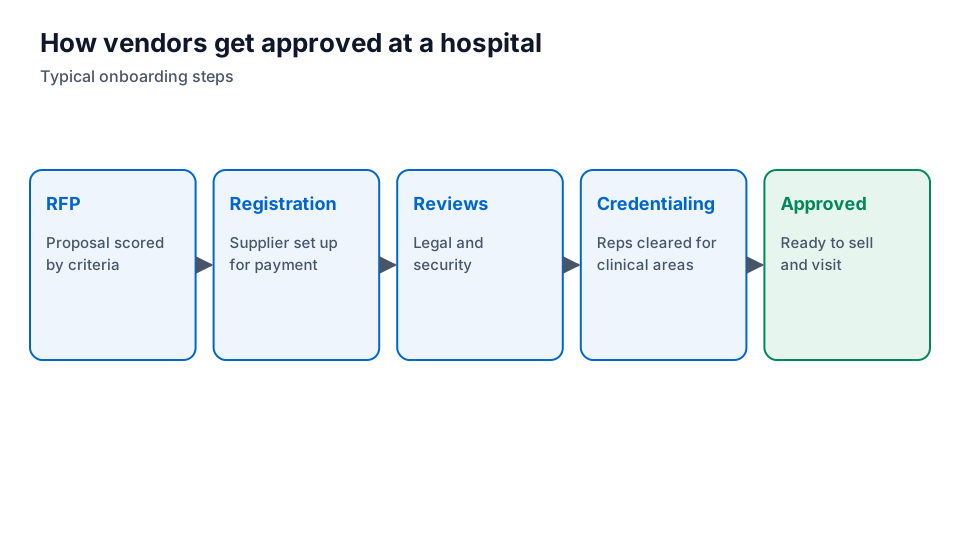
Hospital vendor onboarding is the set of steps a supplier goes through before it can sell to or visit a hospital: responding to requests for proposal (RFPs), registering as a supplier, passing legal and security reviews, and credentialing reps who visit clinical areas.
Why it matters for healthcare sales and marketing
Many deals slow down after the buyer says yes, because the vendor isn't set up in the hospital's systems yet. Knowing the steps lets sales teams start them early and forecast more accurately.
How it works
- RFPs. For larger purchases, supply chain or IT issues a request for proposal and scores responses against set criteria.
- Supplier registration. Tax, insurance and banking details so the hospital can pay you.
- Reviews. Legal contract review, and security reviews for software and connected devices.
- Vendor credentialing. Reps who visit patient-care areas usually register in a credentialing system and show proof of training, immunizations and background checks.
- Value analysis. New clinical products typically also go through the value analysis committee.
Example
Illustrative scenario. A surgical device company wins a surgeon champion's support at a new hospital. Instead of waiting, its sales operations team starts supplier registration and rep credentialing the same week, and sends the security questionnaire for its connected device. By the time the value analysis committee approves a trial, the company can ship and the rep can attend cases.
Common mistakes
- Starting paperwork after the yes. Begin registration and credentialing early.
- Forgetting security reviews. Software and connected devices often need one.
- Showing up uncredentialed. Reps can be turned away from clinical areas.
Related terms
Put it to work
- Supply chain directors list: the people who run procurement
- Mapping the hospital buying committee (ebook): who to reach, and in what order
- MedTech launch use case: planning hospital access