What is a group purchasing organization (GPO)?
Also called: GPO, healthcare GPO
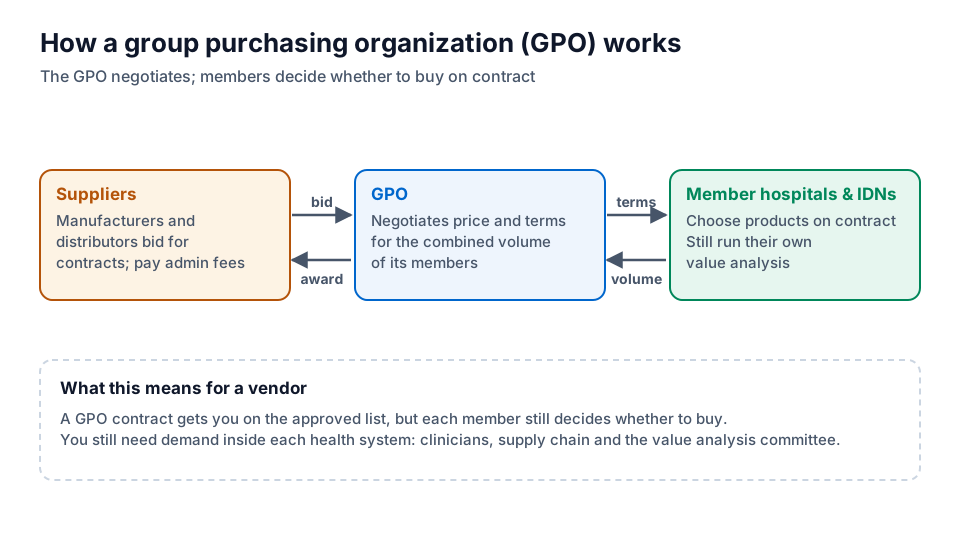
A group purchasing organization (GPO) negotiates contracts with manufacturers and distributors on behalf of its member hospitals and health systems, using their combined buying volume to win better prices and terms. Members then choose whether to buy on those contracts.
Why it matters for healthcare sales and marketing
For medical device, supply and many service vendors, GPOs shape access to hospital customers:
- A contract puts you on the approved list. Many hospitals strongly prefer products that are on their GPO's contract, at the negotiated price.
- A contract isn't a sale. Each member still decides whether to buy, and most still run their own value analysis. Vendors have to build demand inside each hospital and health system.
- Timing matters. GPO contracts for a category come up for bid on a cycle. Missing a bid window can keep a product off contract for years.
How it works
- Members join a GPO. Hospitals, health systems, surgery centers and other providers become members. Large systems sometimes run their own contracting alongside one.
- The GPO runs bids by category. Manufacturers and distributors respond to requests for proposal, and the GPO awards contracts, sometimes to one supplier and sometimes to several.
- Vendors pay administrative fees. Suppliers typically pay the GPO a fee based on purchases made under its contracts. U.S. law allows this under a safe harbor to the Anti-Kickback Statute, provided conditions such as written agreements and disclosure to members are met.
- Members buy through distributors or directly. The GPO negotiates; it usually doesn't hold inventory or ship products.
The largest national GPOs serve thousands of facilities, and regional GPOs and system-owned contracting groups operate alongside them.
Example
Illustrative scenario. A start-up with a new surgical product isn't yet on any GPO contract. In the meantime it sells hospital by hospital: a surgeon champion requests the product, the hospital's value analysis committee reviews it, and the hospital buys off contract. In parallel, the company applies to the innovative technology programs that several GPOs run, so it's ready for the next contract cycle in its category.
Common mistakes
- Treating a GPO contract as a sale. It opens the door. Clinicians, supply chain and value analysis teams still decide at each member.
- Ignoring system contracting. Large IDNs sometimes negotiate their own agreements on top of, or instead of, GPO pricing.
- Confusing GPOs with distributors. GPOs negotiate terms; distributors hold inventory and deliver products.
- Pitching the GPO on clinical value alone. GPOs weigh price, volume and supply reliability. Clinical evidence matters more at the hospital's value analysis stage.
Related terms
Put it to work
- Healthcare GPOs list: contacts at group purchasing organizations
- Supply chain directors list: the hospital buyers who work with GPO contracts
- MedTech launch use case: planning hospital access for a new device