What is a value analysis committee (VAC)?
Also called: VAC, value analysis team, product evaluation committee
A value analysis committee (VAC) is a multidisciplinary hospital or health system team that reviews requests for new products and decides whether to approve them, weighing clinical evidence, safety, total cost and fit with existing contracts.
Why it matters for healthcare sales and marketing
For medical devices, supplies and many clinical products, the value analysis committee is the gate between "a surgeon wants it" and "the hospital buys it".
- Clinician enthusiasm isn't enough. A champion usually has to submit a formal request, and the committee decides.
- Evidence and cost decide. Committees look for clinical outcomes, safety data and total cost of care, not just unit price.
- Several roles, one decision. Physicians, nursing leaders, supply chain and finance all have a voice, so vendors need to reach more than one of them.
How it works
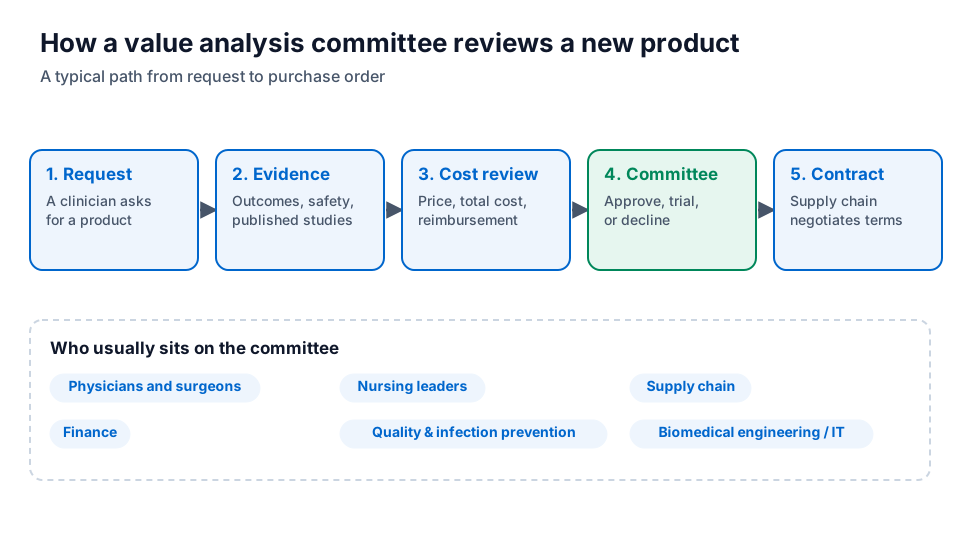
Processes vary by organization, but most follow similar steps:
- Request. A clinician or department requests a new product, often on a standard form.
- Evidence review. The value analysis team gathers clinical evidence, safety information and published studies, and often asks the vendor for data.
- Cost review. Price, total cost of use, reimbursement impact and overlap with products already on contract.
- Committee decision. Approve, approve a trial, or decline.
- Contract and rollout. Supply chain negotiates terms and adds the item to the catalog.
Committees usually include physicians and surgeons, nursing leaders, supply chain, finance, quality and infection prevention, and biomedical engineering or IT for equipment. Many health systems also have a dedicated value analysis manager or director who runs the process.
Example
Illustrative scenario. A company selling an advanced wound dressing has strong interest from a hospital's wound care nurses. The rep works with the lead wound care nurse to submit a value analysis request, then sends the value analysis manager a short evidence summary, the total cost per patient compared with current dressings, and the product's contract status. The committee approves a limited trial on two units, with results reviewed before a wider rollout.
Common mistakes
- Going around the committee. Selling only to a clinician can stall at the request stage, or produce an unapproved purchase that gets reversed.
- Bringing only clinical data. Committees also want cost, reimbursement and supply information. A total-cost comparison often matters as much as outcomes.
- Assuming a GPO contract means approval. Being on contract helps, but most hospitals still review new products locally.
- Not knowing who runs the process. The value analysis manager or director sets the agenda, so reach them early.
Related terms
Put it to work
- Value analysis directors and materials managers list: the people who run value analysis
- Mapping the hospital buying committee (ebook): who to reach, and in what order
- Wound, ostomy and continence nurses list: an example of a clinical champion audience