Mapping the Hospital Buying Committee
Who Actually Signs, Influences and Blocks Your Deal
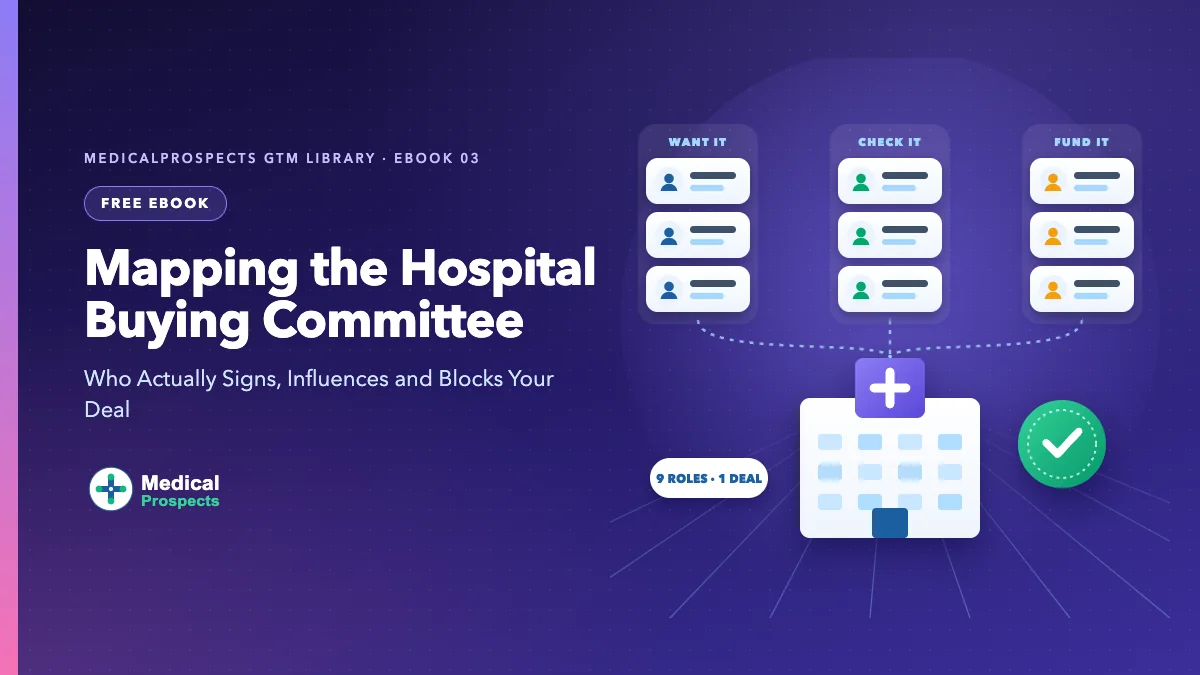
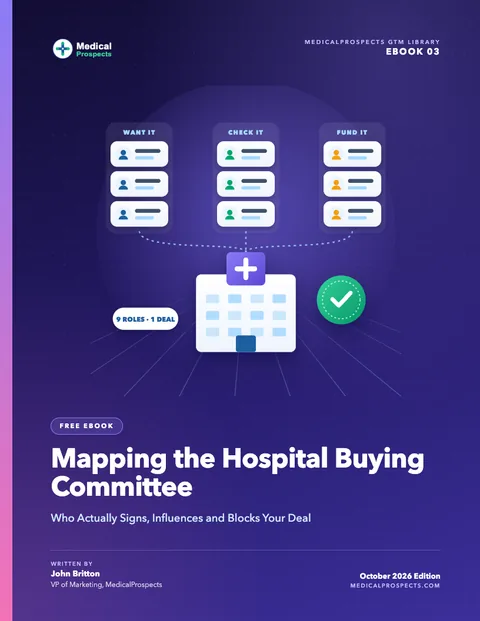
This MedicalProspects eBook shows sales and ABM teams how hospital purchases really get decided. Every deal passes three groups, the people who want it, check it and fund it, and any of them can stop it. Inside are role-by-role messaging, a value analysis committee guide, a six-week multi-threading plan and a committee map template.
Key points
- There is no single decision-maker. Nine roles in three groups can each stop a hospital deal.
- Know who matters for your solution type, from capital equipment to clinical software and pharmaceuticals.
- Prepare for value analysis early with a complete packet: evidence, total cost and standardization impact.
- Answer each role's own question with the evidence that role trusts.
- Multi-thread the account with a six-week plan and engage three or more roles before you propose.
- Use the committee map and deal-health checklist to spot gaps every week.
What's inside this ebook
-
Introduction: There Is No Single Decision-Maker
Most stalled hospital deals stall for the same reason: the vendor was talking to one person. Hospitals buy through committees. A department head can love your product and still lose to an IT security review, a supply chain policy or a budget meeting your rep never knew about.
-
Chapter 1: The Roles in a Hospital Deal
A hospital purchase passes through three groups, and each one asks a different question. The people who want the product, the people who check it and the people who fund it can all stop a deal, and none of them can approve it alone.
-
Chapter 2: Who Matters for Each Type of Solution
Every role appears in some deals, but their weight changes with what you sell. Use this table to decide where to start and who must be engaged before you reach procurement.
-
Chapter 3: How Value Analysis Committees Work
For medical devices and supplies, the value analysis committee (VAC) is often where a deal is decided. Many vendors meet it only at the end, when it is too late to prepare.
-
Chapter 4: Getting Through IT and Security Review
Any product that connects to a network, holds data or touches the electronic health record passes an IT and security review. It is the most common place for a clinically popular product to stall.
-
Chapter 5: Budgets, Capital Cycles and Contracts
A product can win every evaluation and still not be bought, because the money, the timing or the contract is not ready. Understanding how hospitals fund purchases prevents long, silent delays.
-
Chapter 6: Messages That Work for Each Role
Each committee member reads your outreach with one question in mind. Answer that question in the first two lines, and use the evidence that role trusts.
-
Chapter 7: Multi-Threading: Reaching the Whole Committee
Multi-threading means building a relationship with several committee members at the same time, each with their own message. If one contact goes quiet, the deal keeps moving through the others.
-
Chapter 8: Committee Map Template and Deal-Health Checklist
Fill in one map per target account. Review it with your team every week. The gaps in the map show you what to do next.
-
Conclusion: Sell to the Committee, Not the Contact
Hospital deals are won by the vendor that understands the whole buying group. Map the roles, learn the approval path, prepare for value analysis and IT review early, and give each person a message that answers their own question.
Get the full ebook
All 10 sections, with checklists, tables and templates you can use with your team.

John Britton
John works with healthcare sales and marketing teams on precision targeting, campaign strategy, and audience intelligence solutions at MedicalProspects.
More ebooks →