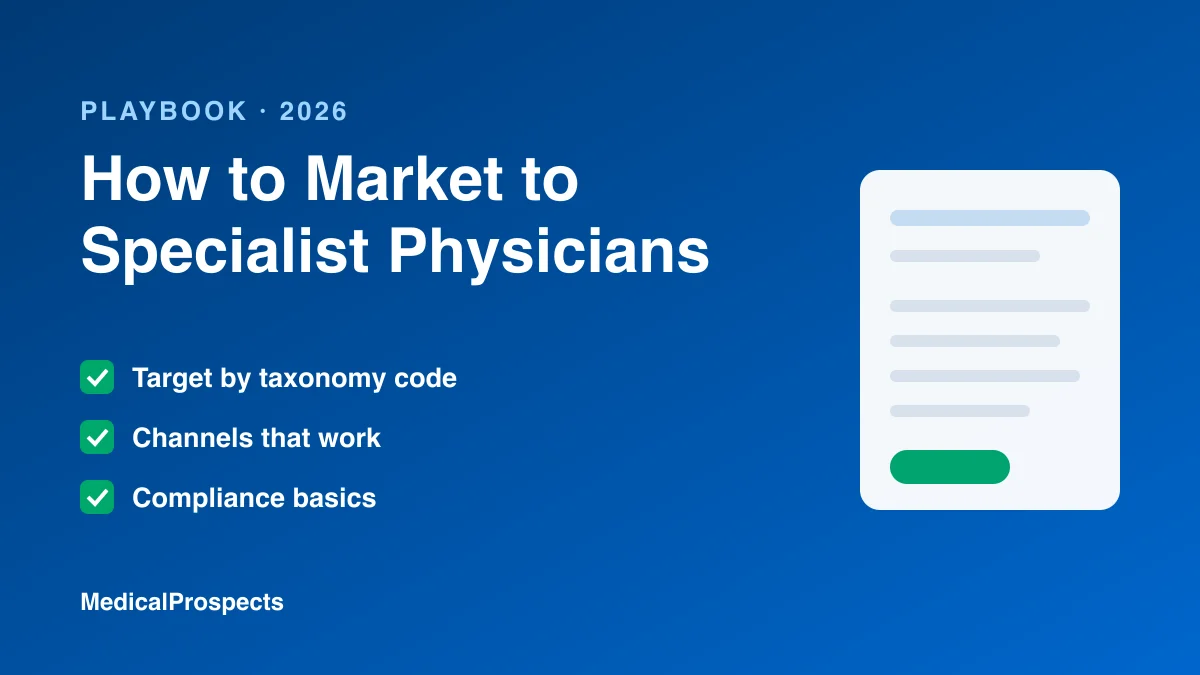
How to Market to Specialist Physicians: A Playbook for Pharma and MedTech

VP of Marketing, MedicalProspects
November 4, 2026
TLDR
Specialist physicians respond to precise, clinically relevant outreach. Target by NUCC taxonomy code and practice setting rather than broad specialty, lead with evidence that matters to their patients, combine email with field, events and digital channels, and follow CAN-SPAM and company compliance rules.
1. Define the audience precisely
Use taxonomy codes to separate subspecialties, such as interventional cardiologists from general cardiologists, and add practice setting and affiliation. Precise audiences are smaller but far more responsive. See subspecialty targeting.
2. Lead with clinical relevance
Specialists want to know what changes for their patients: outcomes, safety, workflow. Lead with the most relevant finding for their subspecialty and setting, and keep promotional claims within approved content.
3. Use the right channels
- Email for evidence summaries, webinars and events.
- Field and inside sales for high-value accounts.
- Events and CME for education and peer influence.
- Rep-triggered email for compliant follow-up.
4. Respect their time
Short messages, clear subject lines, a single call to action, and an easy opt-out. Measure clicks and replies, not opens, because privacy features inflate open rates. See email engagement rate.
5. Stay compliant
B2B email to physicians in the U.S. is governed by the CAN-SPAM Act, not HIPAA. Pharma teams also apply company promotional review, opt-outs from CRM and PDRP restrictions where prescribing data is involved.
Final Thoughts
Precision beats volume with specialists: the right subspecialty, a relevant message and a respectful cadence. To build this audience, send us your target specialties, roles and territories for a free count and 20 sample records, or read our guide to buying healthcare contact data.
Build a High-Precision Healthcare Target List
Reach verified healthcare decision-makers, buying groups, and clinical specialists segmented by specialty, organization type, technology, and geography.
Talk to Our Experts Today →Frequently Asked Questions (FAQs)
Q:
How do you market to specialist physicians?
Target by taxonomy code and practice setting, lead with clinically relevant evidence, use email alongside field, events and CME, keep messages short, and follow CAN-SPAM and company compliance rules.
Q:
Is it legal to email physicians?
In the U.S., B2B email to physicians is governed by CAN-SPAM: honest sender details, a physical address and a working opt-out honored within 10 business days. HIPAA covers patient information, not physicians' professional contact details.
Q:
What is the best channel to reach specialists?
A combination: email for evidence and events, field and inside sales for priority accounts, and events or CME for education and peer influence.
Q:
How do I target a subspecialty?
Select the NUCC taxonomy specialization code for the subspecialty, check secondary taxonomies, and add practice setting or affiliation.
John Britton
VP of Marketing, MedicalProspects
John works with healthcare sales and marketing teams on precision targeting, campaign strategy, and audience intelligence solutions at MedicalProspects.
Related Insights