What is practice management software?
Also called: PMS, Practice Management Software (PMS) Buyer
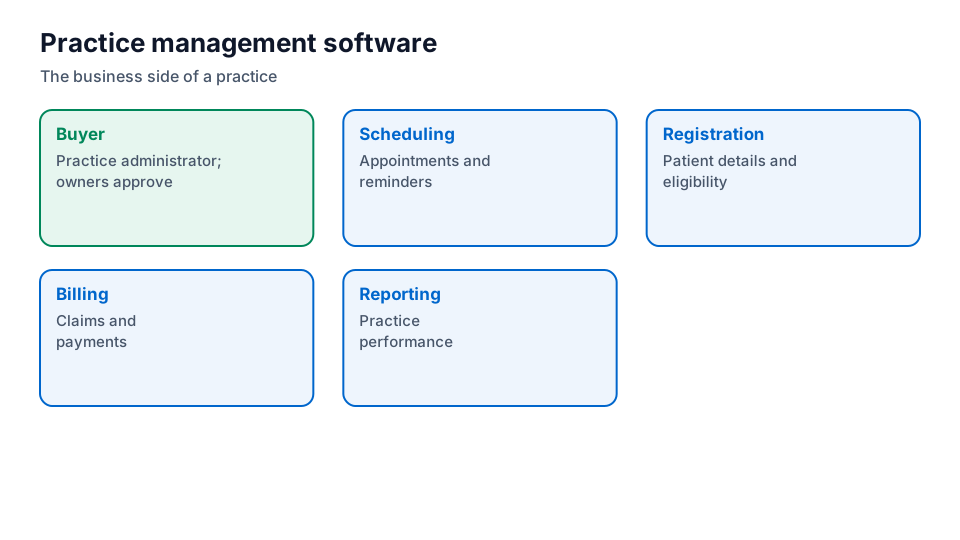
Practice management software (PMS) runs the business side of a medical or dental practice: scheduling, patient registration, insurance eligibility, billing and reporting. It is often bought together with, or as part of, an EHR.
Why it matters for healthcare sales and marketing
In independent practices, the buyer for software and services is often the practice administrator or office manager, not a large IT department. That makes practices a faster, more direct sale, if you reach the right person.
How it works
- Functions: scheduling, registration, eligibility checks, claims and billing, reporting.
- Buyers: practice administrators and office managers, with physician owners approving larger purchases.
- Bundling: many ambulatory EHRs include PMS; some practices use separate systems.
Example
Illustrative scenario. A patient payment company targets practice administrators at dermatology and orthopedic practices running a particular PMS it integrates with, leading with faster collections and fewer front-desk calls.
Common mistakes
- Targeting physicians first. Administrators usually run the evaluation.
- Ignoring the installed system. Integration with the current PMS or EHR often decides the deal.
- Treating all practices alike. Specialty and size change needs.
Related terms
Put it to work
- Operations and administration lists: practice administrators and managers
- RCM software users list: billing system users
- Sales teams use case: reaching practice decision makers