What is medical device commercialization?
Also called: MedTech Commercialization GTM, MedTech go-to-market, device launch
Medical device commercialization is everything a company does to bring a cleared or approved device to market and drive adoption: market access and reimbursement, clinical evidence, hospital and surgeon adoption, and sales and marketing.
Why it matters for healthcare sales and marketing
Regulatory clearance is only the start. Devices succeed when surgeons want them, hospitals approve them through value analysis, payers reimburse the procedure, and the commercial team reaches the right accounts in the right order.
How it works
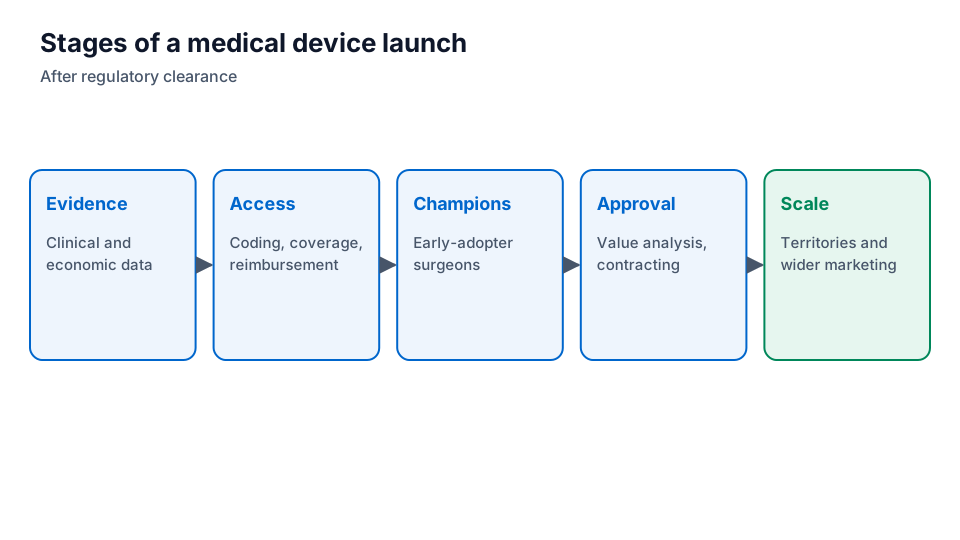
- Evidence: clinical and economic data for clinicians, committees and payers.
- Access: coding, coverage and reimbursement for the procedure.
- Champions: early-adopter surgeons and specialists, often KOLs.
- Hospital approval: value analysis, supply chain and contracting, sometimes through a GPO.
- Scale: territory planning, sales coverage and marketing to the wider audience.
Example
Illustrative scenario. A company launching a new spine implant first reaches spine surgeons who have published on the technique, then targets hospitals and surgery centers where those surgeons operate, bringing value analysis evidence and reimbursement information to each.
Common mistakes
- Marketing before access. Without reimbursement, adoption stalls.
- Only reaching surgeons. Hospitals must approve the product too.
- Launching everywhere at once. Sequence accounts by readiness.
Related terms
Put it to work
- MedTech launch use case: launch audiences
- Orthopedic implant launch case study: a launch example
- Surgeon lists: surgical specialties