What are physician preference items?
Also called: PPI, physician preference products
Physician preference items (PPI) are medical devices and supplies, often high-cost implants such as orthopedic, spine and cardiac devices, whose choice is driven mainly by the preference of the physician using them.
Why it matters for healthcare sales and marketing
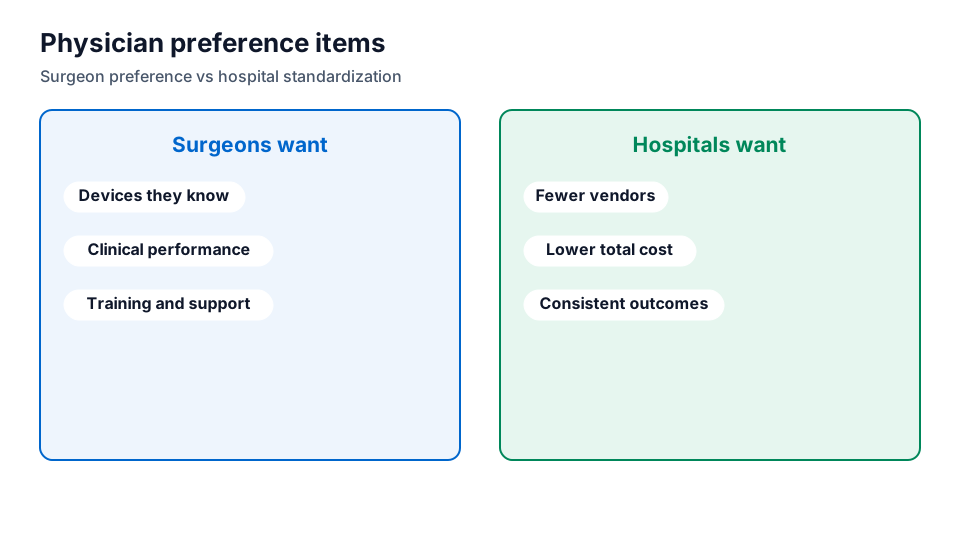
PPI are a large share of hospital supply spending, so hospitals try to standardize vendors and prices through value analysis. Device companies must win both surgeon preference and hospital approval.
How it works
- Examples: orthopedic and spine implants, cardiac devices, some surgical instruments.
- Tension: surgeons prefer devices they know; hospitals want fewer vendors and lower prices.
- Decision process: surgeons, service line leaders, supply chain and value analysis, sometimes with GPO or system contracts.
Example
Illustrative scenario. A spine implant company with strong surgeon support at a hospital faces a standardization initiative. It works with the spine service line leader and supply chain to show outcomes and total cost, so its device stays on the approved list.
Common mistakes
- Relying on surgeon loyalty alone. Hospitals standardize PPI.
- Ignoring total cost. Supply chain compares the whole episode, not just price.
- Missing service line leaders. They balance surgeon and hospital goals.
Related terms
Put it to work
- Orthopedic surgeons list: implant users
- Value analysis directors list: standardization leaders
- MedTech launch use case: launch planning