What is longitudinal provider data?
Also called: Longitudinal Provider & Facility Data, provider history data
Longitudinal provider data tracks how a provider's details change over time, such as their affiliations, practice locations, specialties and roles, rather than showing a single snapshot.
Why it matters for healthcare sales and marketing
A snapshot tells you where a physician works today. History tells you more: who just joined a health system, who moved to a new practice, which groups were acquired. Those changes are often the best moments to start a conversation, and they explain shifts in referral patterns and buying decisions.
How it works
- Snapshot data: the current state of each record.
- Longitudinal data: each record plus a dated history of changes, such as a new affiliation, address or title.
- Typical uses: spotting movers, tracking practice acquisitions, keeping territory and account ownership current, and analyzing trends over time.
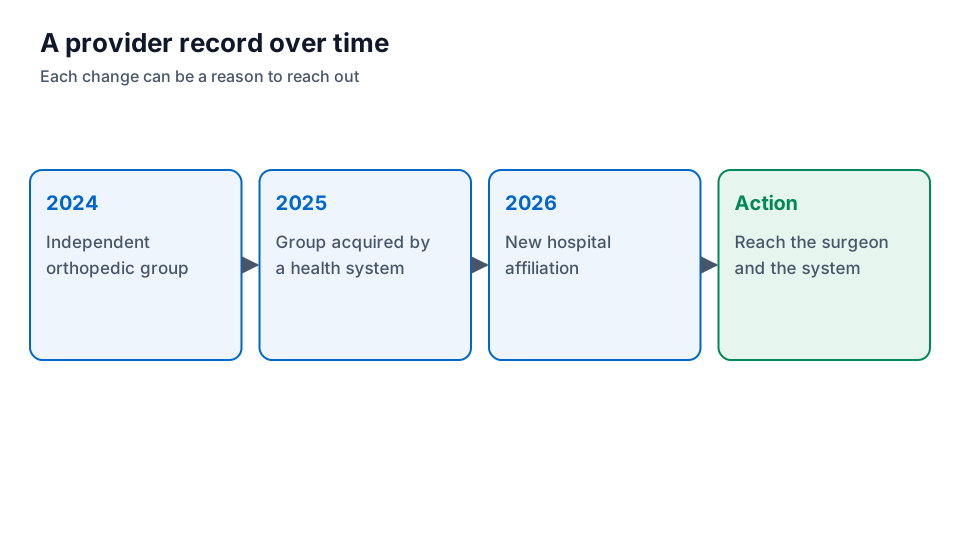
Example
Illustrative scenario. A medical device company notices that several orthopedic surgeons in its territory moved from an independent group to a health system that has a contract with a competitor. Seeing those moves early, the rep reaches the surgeons at their new hospital and brings in the health system's value analysis team.
Common mistakes
- Overwriting history. If each refresh replaces old values, you lose the moves that signal opportunity.
- Treating every change as a trigger. Focus on moves that matter for your product.
- Confusing provider history with patient data. Longitudinal provider data is about professionals, not patients.
Related terms
Put it to work
- Data enrichment, explained: keeping records current
- Territory planning use case: keeping territories current as providers move
- Data quality methodology: our verification process