What are SPF, DKIM and DMARC?
Also called: SPF, DKIM, DMARC, email authentication
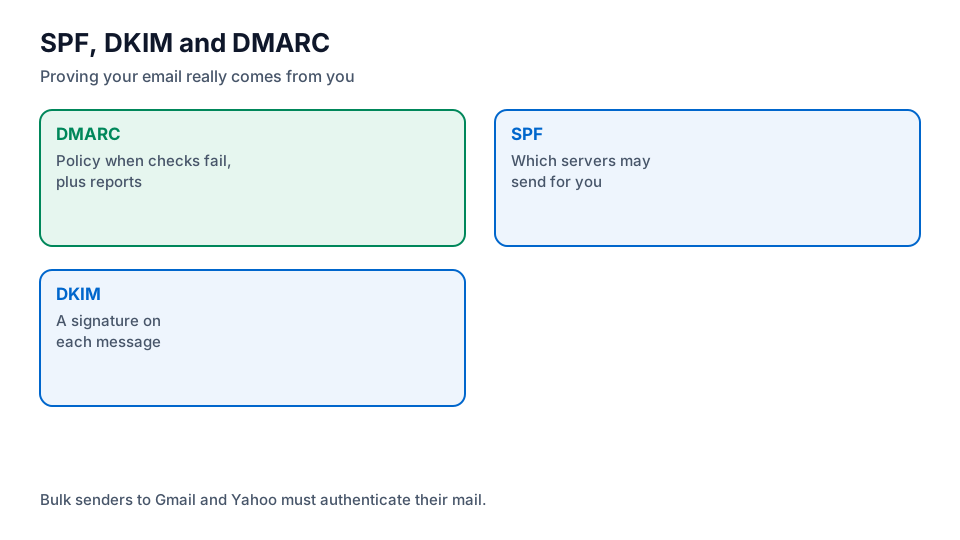
SPF, DKIM and DMARC are email authentication standards that prove a message really comes from your domain. SPF lists the servers allowed to send for you, DKIM adds a cryptographic signature, and DMARC tells receivers what to do when checks fail.
Why it matters for healthcare sales and marketing
Mailbox providers trust authenticated mail more, and Google and Yahoo now require bulk senders to authenticate. Without it, even well-targeted campaigns can land in spam, and others can spoof your domain.
How it works
- SPF (Sender Policy Framework): a DNS record listing the mail servers allowed to send for your domain.
- DKIM (DomainKeys Identified Mail): a signature on each message, checked against a public key in your DNS.
- DMARC (Domain-based Message Authentication, Reporting and Conformance): a DNS policy that tells receivers to accept, quarantine or reject mail that fails SPF or DKIM alignment, and sends you reports.
Set them up for every tool that sends email for you: CRM, marketing automation and sales engagement platforms.
Example
Illustrative scenario. A MedTech marketing team adds a new sales engagement tool and sees replies drop. DMARC reports show the tool's emails fail authentication. IT adds the tool to SPF and sets up its DKIM key, and deliverability recovers.
Common mistakes
- Forgetting third-party senders. Every tool that sends for you needs to pass.
- Jumping straight to a strict DMARC policy. Start with monitoring, then tighten.
- Never reading DMARC reports. They show who is sending as you.
Related terms
Put it to work
- Sender reputation, explained: why authentication matters
- How to buy healthcare contact data: preparing for a campaign
- Multi-channel marketing use case: email alongside other channels
Sources
- Email sender guidelines, Google
- DMARC overview, DMARC.org