What is data cleansing?
Also called: data hygiene, data cleaning, Data Cleansing & Verification
Data cleansing is fixing or removing incorrect, duplicate, incomplete or badly formatted records in a database, for example merging duplicate physicians, standardizing titles and addresses, and removing invalid emails.
Why it matters for healthcare sales and marketing
Dirty data wastes rep time, breaks segmentation and hurts deliverability. In healthcare CRMs the usual problems are duplicate physicians from different sources, inconsistent titles, outdated addresses and emails that no longer work.
How it works
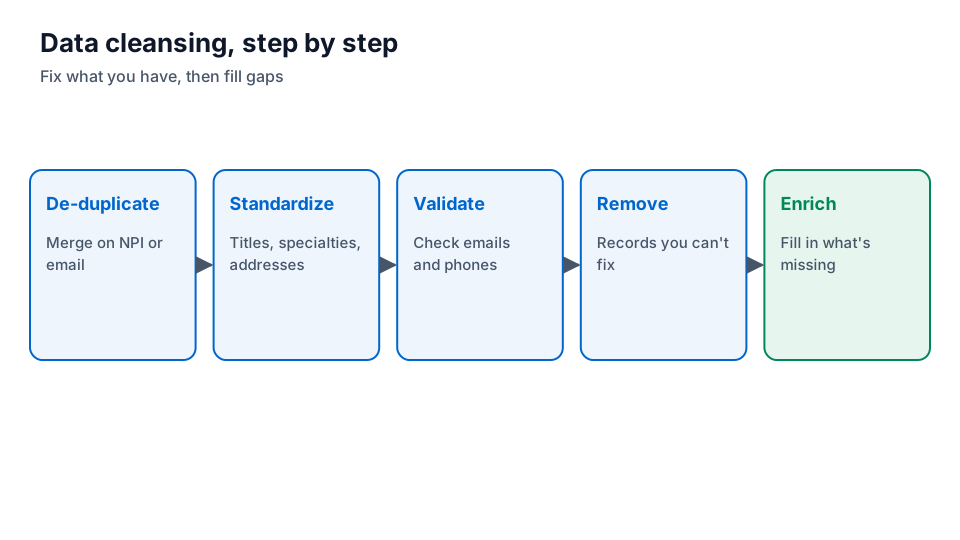
- De-duplicate on a stable key: NPI for clinicians, otherwise email or name plus organization.
- Standardize titles, specialties, addresses and phone formats.
- Validate emails and remove or flag failures.
- Remove records that can't be fixed or are no longer relevant.
- Enrich what's missing, which is a separate step (data enrichment).
Example
Illustrative scenario. Before a CRM migration, a Marketing Ops team finds the same cardiologist in three records with different spellings and two old emails. It merges records on NPI, standardizes specialty values to taxonomy-based categories, removes invalid emails, and imports a smaller, cleaner database.
Common mistakes
- De-duplicating on name. Common names merge different people. Use NPI where you can.
- Cleansing once a year. Build it into regular operations.
- Deleting without a backup. Keep a record of what changed.
Related terms
Put it to work
- Data enrichment, explained: the next step after cleansing
- Enrichment in our FAQ: sending records for enrichment
- Data quality methodology: our verification process