What does a medical practice administrator do?
Also called: practice manager, office manager, medical practice executive
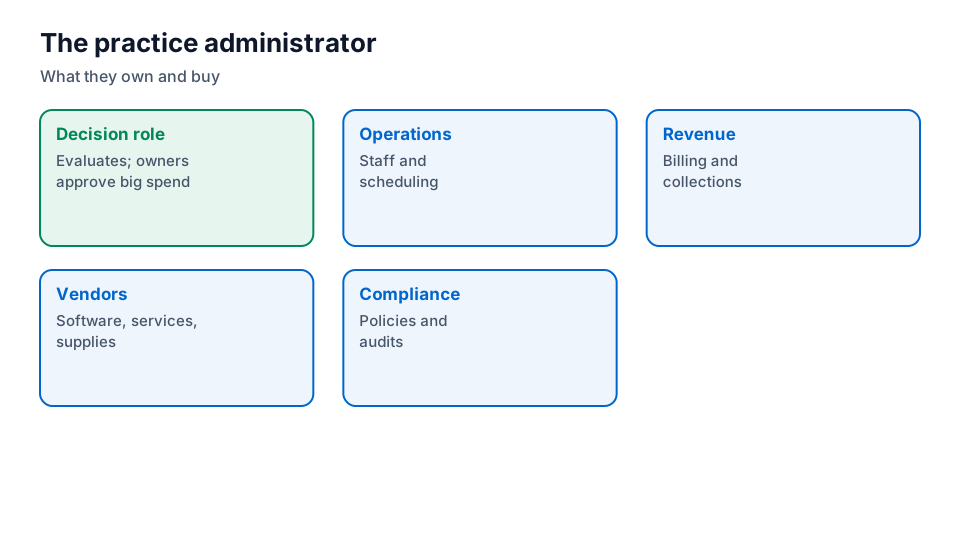
A practice administrator (or practice manager) runs the business side of a physician or dental practice: staff, scheduling, billing, vendors, technology and compliance. They are often the main buyer of software and services for the practice.
Why it matters for healthcare sales and marketing
In independent practices, the administrator usually evaluates and often decides on software, services and supplies, with physician owners approving larger spend. They are easier to reach than physicians and care about practical results: time saved, collections, patient experience.
How it works
- Owns: operations, staffing, billing and collections, vendor relationships, IT and compliance.
- Buys: practice management and EHR add-ons, billing services, phone and patient communication tools, supplies, staffing.
- Works with: physician owners or a managing partner for major decisions.
Example
Illustrative scenario. A patient communication platform targets practice administrators at multi-physician specialty practices, leading with fewer no-shows and less front-desk phone time. Administrators who see a demo bring the proposal to the managing partner.
Common mistakes
- Going straight to physicians. Administrators usually run the evaluation.
- Abstract pitches. Show hours saved and money collected.
- Ignoring practice size. Larger groups have more formal buying processes.
Related terms
Put it to work
- Operations and administration lists: practice administrators and managers
- Sales teams use case: reaching practice decision makers
- Practice management software, explained: a common purchase