What is the difference between outpatient and inpatient care?
Also called: Outpatient ASC vs. Inpatient Hospital Targeting, ambulatory care
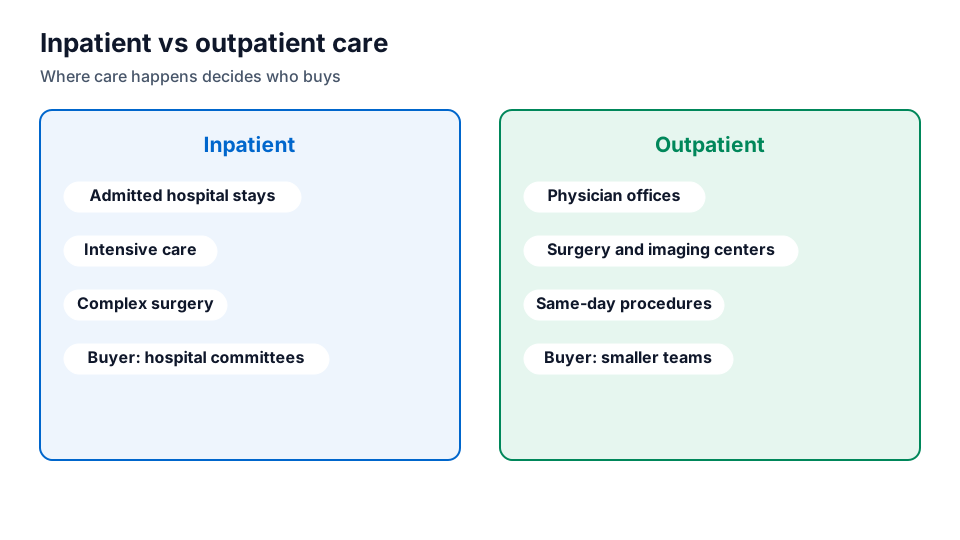
Inpatient care is care for patients formally admitted to a hospital; outpatient (ambulatory) care is care that doesn't require admission, such as clinic visits, same-day surgery and imaging. More procedures are moving from inpatient to outpatient settings.
Why it matters for healthcare sales and marketing
Where care happens decides who buys. Inpatient purchases run through hospital committees; outpatient settings, such as surgery centers, clinics and imaging centers, often have smaller, faster decision teams. As care shifts outpatient, device and service vendors follow.
How it works
- Inpatient: admitted hospital stays, intensive care, complex surgery.
- Outpatient: physician offices, hospital outpatient departments, ambulatory surgery centers, imaging centers, urgent care.
- The shift: new techniques and payment policy keep moving procedures, such as some joint replacements, into outpatient settings.
Example
Illustrative scenario. An orthopedic device company that sold mostly to hospitals adds an outpatient track: surgery centers and orthopedic practices, with messaging on cost per case and turnover time.
Common mistakes
- Assuming the hospital is the only buyer. Outpatient settings may now perform the procedure.
- Using inpatient sales motions outpatient. Decision teams are smaller and faster.
- Confusing hospital outpatient departments with ASCs. They're different settings with different buyers.
Related terms
Put it to work
- Ambulatory surgery centers list: outpatient surgery buyers
- Hospitals list: hospital and health system contacts
- MedTech launch use case: planning launches across settings