What is a DEA number?
Also called: DEA registration number, DEA registration
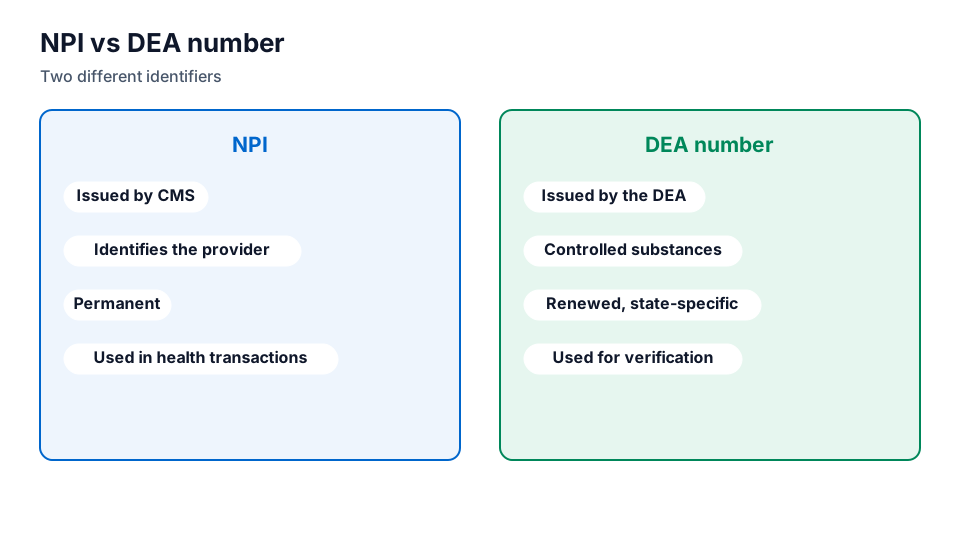
A DEA number is the registration number the U.S. Drug Enforcement Administration issues to practitioners and organizations allowed to prescribe, dispense or handle controlled substances. It is separate from the NPI.
Why it matters for healthcare sales and marketing
A DEA registration shows a practitioner is authorized to prescribe controlled substances, which matters for pharma teams in therapeutic areas such as pain, addiction medicine and psychiatry, and for pharmacies verifying prescriptions.
How it works
- Who has one: practitioners who prescribe controlled substances, plus pharmacies, hospitals, manufacturers and distributors that handle them.
- Registration is tied to the state where the practitioner prescribes, and must be renewed.
- Different from NPI: the NPI identifies a provider for health transactions; the DEA number authorizes controlled substance activity.
- Privacy: DEA numbers aren't for marketing outreach; use them only for legitimate verification.
Example
Illustrative scenario. A pharma commercial team planning a launch in addiction medicine confirms that its target prescribers are authorized to prescribe the relevant controlled substances before building call plans.
Common mistakes
- Confusing DEA numbers with NPIs. They serve different purposes.
- Treating DEA numbers as public marketing data. Use them only for legitimate verification.
- Assuming every clinician has one. Many don't prescribe controlled substances.
Related terms
Put it to work
- NPI, explained: the main provider identifier
- Pain management physicians list: an example prescriber audience
- Pharma and biotech lists: life sciences audiences
Sources
- DEA Diversion Control Division: Registration, U.S. Drug Enforcement Administration