What is the difference between a payer and a provider in healthcare?
Also called: Payer vs. Provider Marketing, health plan vs provider
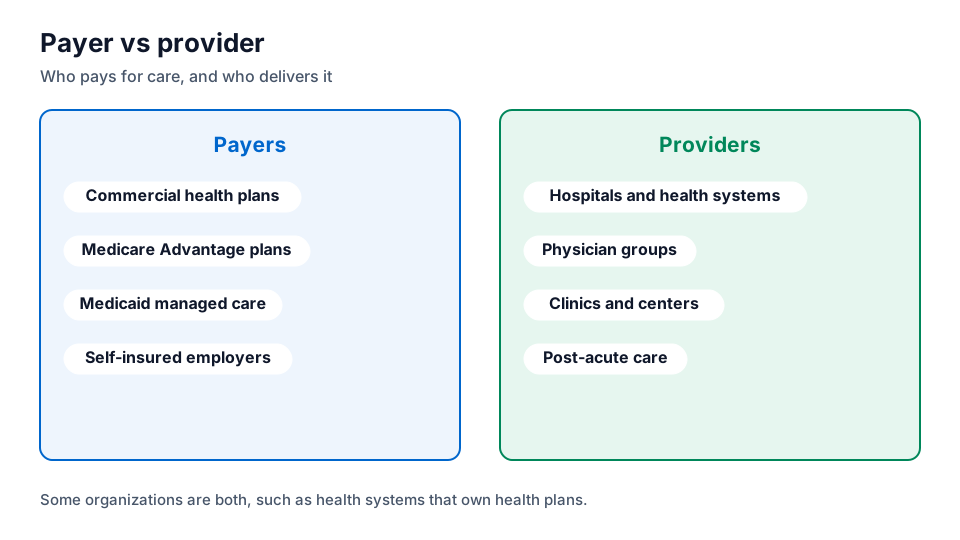
In healthcare, payers pay for care and providers deliver it. Payers include commercial health plans, Medicare, Medicaid and self-insured employers; providers include hospitals, physician practices, clinics and other care settings.
Why it matters for healthcare sales and marketing
Payers and providers buy different things for different reasons. Payers buy for member management, cost control, quality ratings and claims; providers buy for clinical care, operations and getting paid. A message built for one rarely works for the other.
How it works
- Payers: commercial insurers, Medicare Advantage plans, Medicaid managed care, self-insured employers and their administrators.
- Providers: hospitals, health systems, physician groups, clinics, post-acute care.
- Overlap: some organizations are both (payviders), such as health systems that own health plans.
Example
Illustrative scenario. A care management platform sells to health plans on member outcomes and Star Ratings, and to health systems on avoiding readmissions under value-based contracts, with separate campaigns, titles and case studies for each.
Common mistakes
- One message for both. Payers and providers measure success differently.
- Missing payviders. Integrated organizations need both angles.
- Using provider titles at payers. Payer roles have different names and functions.
Related terms
Put it to work
- Payers and partners lists: health plan and payer contacts
- Hospitals list: hospital and health system contacts
- Value-based care, explained: where payers and providers meet