What is the 340B drug pricing program?
Also called: 340B, 340B program
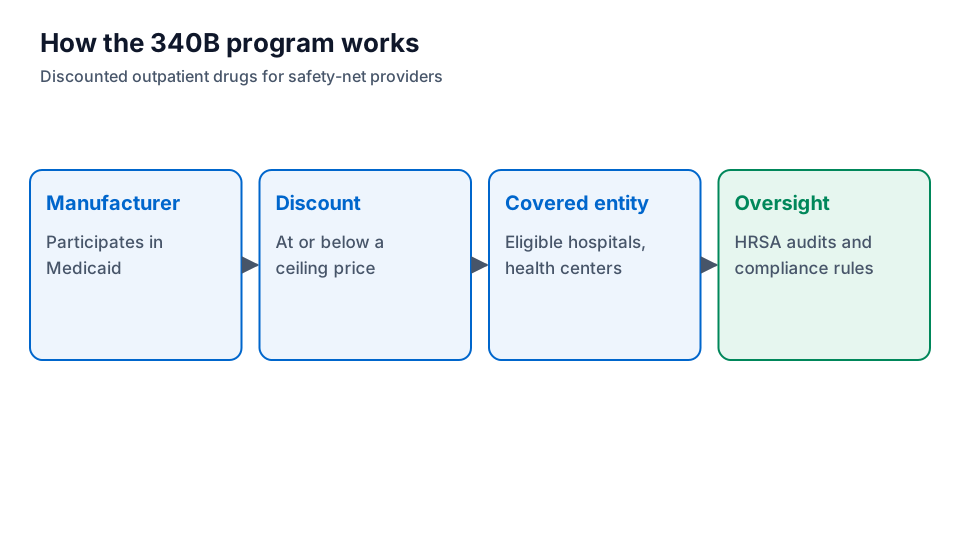
The 340B Drug Pricing Program is a U.S. federal program that requires drug manufacturers participating in Medicaid to sell outpatient drugs at discounted prices to eligible safety-net providers, called covered entities, such as certain hospitals and federally qualified health centers. It is administered by HRSA.
Why it matters for healthcare sales and marketing
340B affects drug pricing, pharmacy operations and hospital finances. Covered entities and their contract pharmacies buy software and services to manage compliance and savings, and pharma companies track 340B closely in their pricing and access strategy.
How it works
- Covered entities: eligible hospitals (such as some disproportionate share, children's and critical access hospitals) and certain federal grantees such as federally qualified health centers.
- Discounts: manufacturers sell covered outpatient drugs to these entities at or below a ceiling price.
- Contract pharmacies: many covered entities dispense through outside pharmacies.
- Oversight: HRSA's Office of Pharmacy Affairs; covered entities must prevent duplicate discounts and diversion.
Example
Illustrative scenario. A pharmacy software company targets pharmacy directors and 340B program managers at covered hospitals and health centers, leading with audit readiness and accurate tracking of eligible prescriptions.
Common mistakes
- Assuming every hospital participates. Eligibility is specific.
- Ignoring compliance. Audits and duplicate-discount rules shape buying.
- Overlooking contract pharmacies. They're part of the 340B workflow.
Related terms
Put it to work
- Pharmacy directors list: hospital pharmacy leaders
- Care facility lists: hospitals and health centers
- Pharmacy professionals lists: pharmacist audiences