Why Rare Disease Marketing Requires More Than a Traditional HCP List

VP of Marketing, MedicalProspects
September 22, 2026
TL;DR
Rare disease marketing requires more than a traditional Healthcare Professionals (HCP) Email List; the right audience is often highly specialized and dispersed. Specialty alone may not reveal which HCPs influence diagnosis, referrals, or treatment. By looking at the patient journey, referral networks, and other audience signals, marketers can identify and prioritize HCPs based on relevance rather than volume. The goal is to understand who matters, why they matter, and where they fit in the care pathway.
There are over 6,500 known rare diseases, affecting an estimated 329–624 million people worldwide. The data comes from Orphanet, one of the world's leading rare disease information platforms, trusted by global healthcare bodies including the WHO and the EU, and pharmaceutical companies.
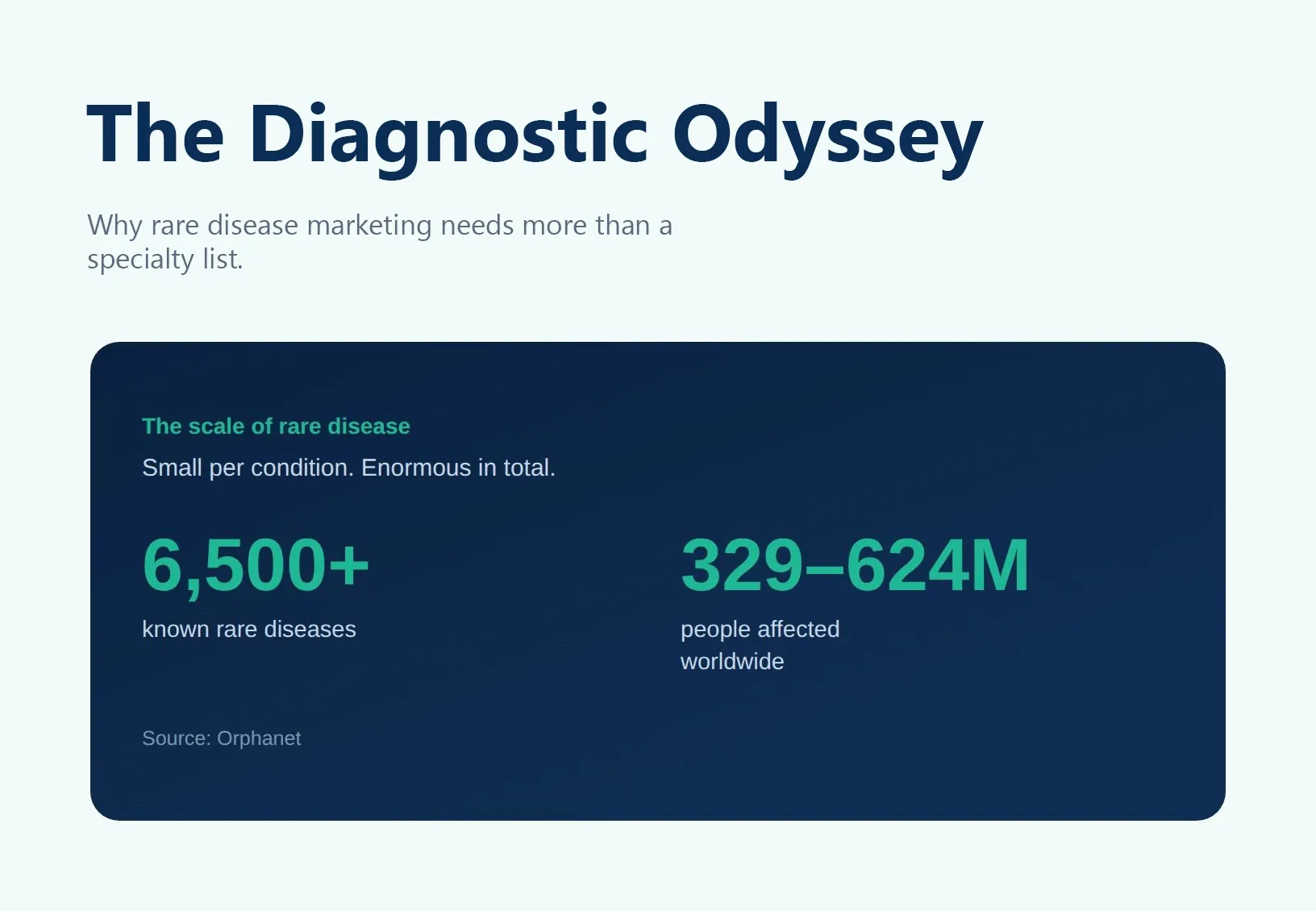
Orphanet’s work highlights an important question: Why do these diseases require specialized attention in the first place? Scientifically known as disorders, malformations, clinical syndromes, or biological anomalies, uncommon diseases occur in a small portion of individuals. However, they affect a sizable, geographically scattered population.
Orphan drugs serve small, underfunded patient populations, which makes commercialization difficult. To succeed anyway, pharma companies must pinpoint the specific patients, specialists, and organizations that matter across a fragmented healthcare landscape. For rare disease marketers, the challenge isn't finding more healthcare professionals (HCPs). It's finding the right ones.
A specialty list doesn't reflect the full rare disease patient population
A traditional HCP list often starts with specialty. But rare disease care typically spans multiple specialties, which makes it difficult to define the right audience by specialty alone.
An HCP may encounter a patient during diagnosis, referral, treatment, or ongoing care. Their relevance depends on where they sit in the disease journey, not simply the title attached to their name.
This creates a real limitation for marketers relying only on specialty-based lists. They may reach HCPs with the right credentials but limited relevance to a particular disease, while overlooking physicians who influence diagnosis or referral in the first place.
For rare disease outreach, specialty should be a starting point, not the final targeting criteria. A stronger audience considers the HCP's role, relevance, and connection to the broader care pathway.
The patient journey matters more than the HCP title
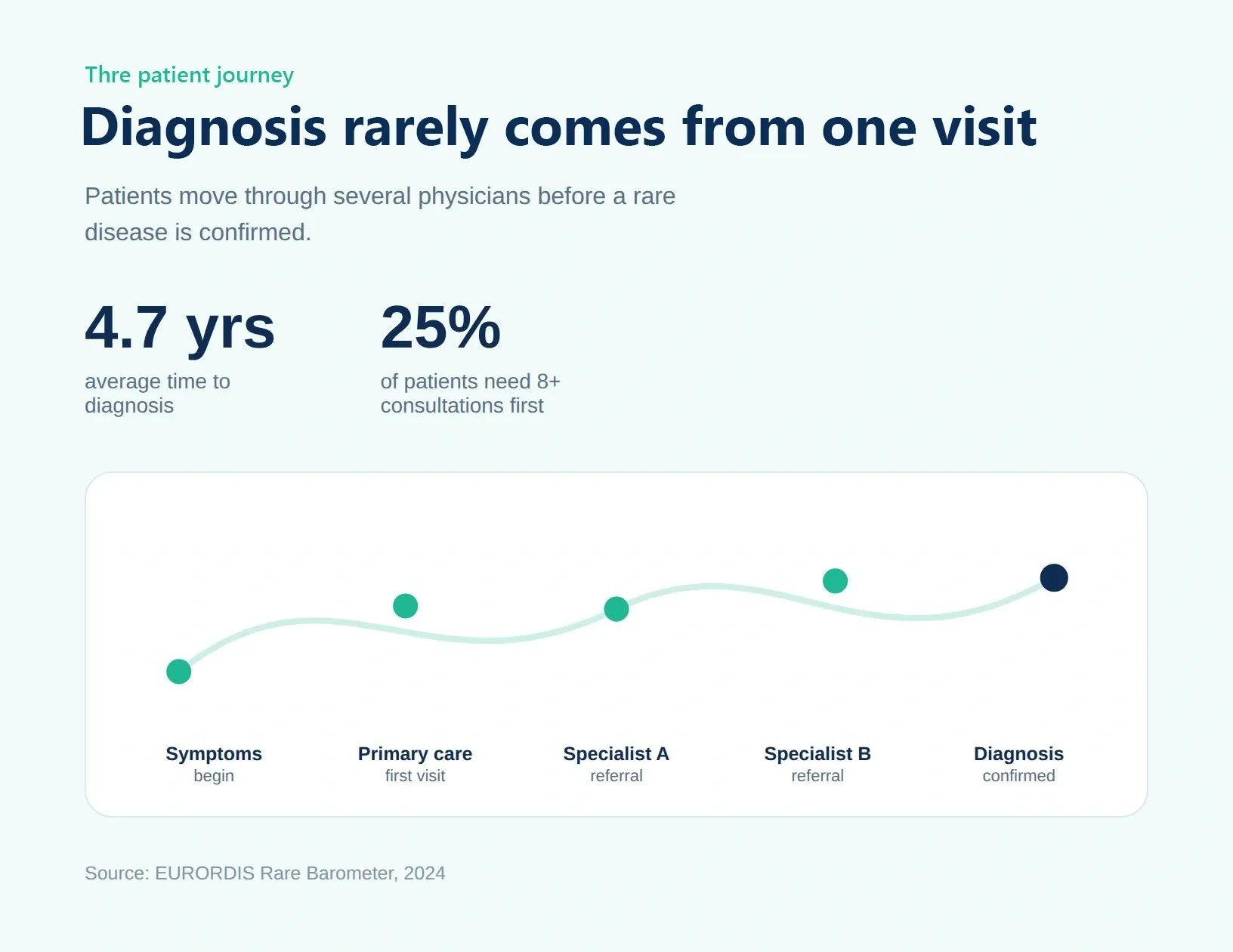
A patient diagnosed with an uncommon disease often sees multiple HCPs before receiving an accurate diagnosis, a pattern widely referred to as the "diagnostic odyssey."
According to a 2024 EURORDIS Rare Barometer survey, the average diagnosis takes 4.7 years, with 25% of patients requiring eight or more consultations before confirmation.
Usually, this long journey involves primary care physicians, specialists, diagnosticians, and referral centers. It may take months or can even be extended to years.
In simple words, this means:
- The most relevant HCP isn't always the obvious specialist.
- A physician who spots early symptoms can matter just as much as the one who diagnoses.
- For B2B marketers, role in the care journey matters as much as title.
- This helps identify who influences diagnosis, referral, treatment, and ongoing care.
- Know the journey. Reach the right HCP. Talk to MedicalProspects to get started.
Referral networks reveal what traditional HCP lists miss
The diagnosis of rare disease usually requires coordination across specialties, since no single physician typically sees the full picture.
A physician who doesn't treat the disease directly may still play a critical role, recognizing symptoms early and referring the patient to the right specialist.
This makes referral patterns valuable when identifying HCP audiences. They help marketers understand how patients actually move between primary care physicians, specialists, diagnostic centers, and rare disease treatment centers.
This distinction matters when organizing an outreach campaign for an uncommon disease:
- A traditional HCP list identifies the specialists most likely to treat a condition, but not the physicians who influence how patients reach them.
- Mapping these referral connections adds context that specialty alone can't provide.
- The goal isn't simply to identify physicians who treat a disease.
- It's to understand the wider network of HCPs who influence diagnosis, referral, and treatment.
Target rare disease specialists by relevance, not volume
Rare disease campaigns don't succeed by reaching the largest possible HCP list.
They succeed by reaching the right one. A smaller, disease-relevant audience consistently outperforms a broad, generic one for focused outreach.
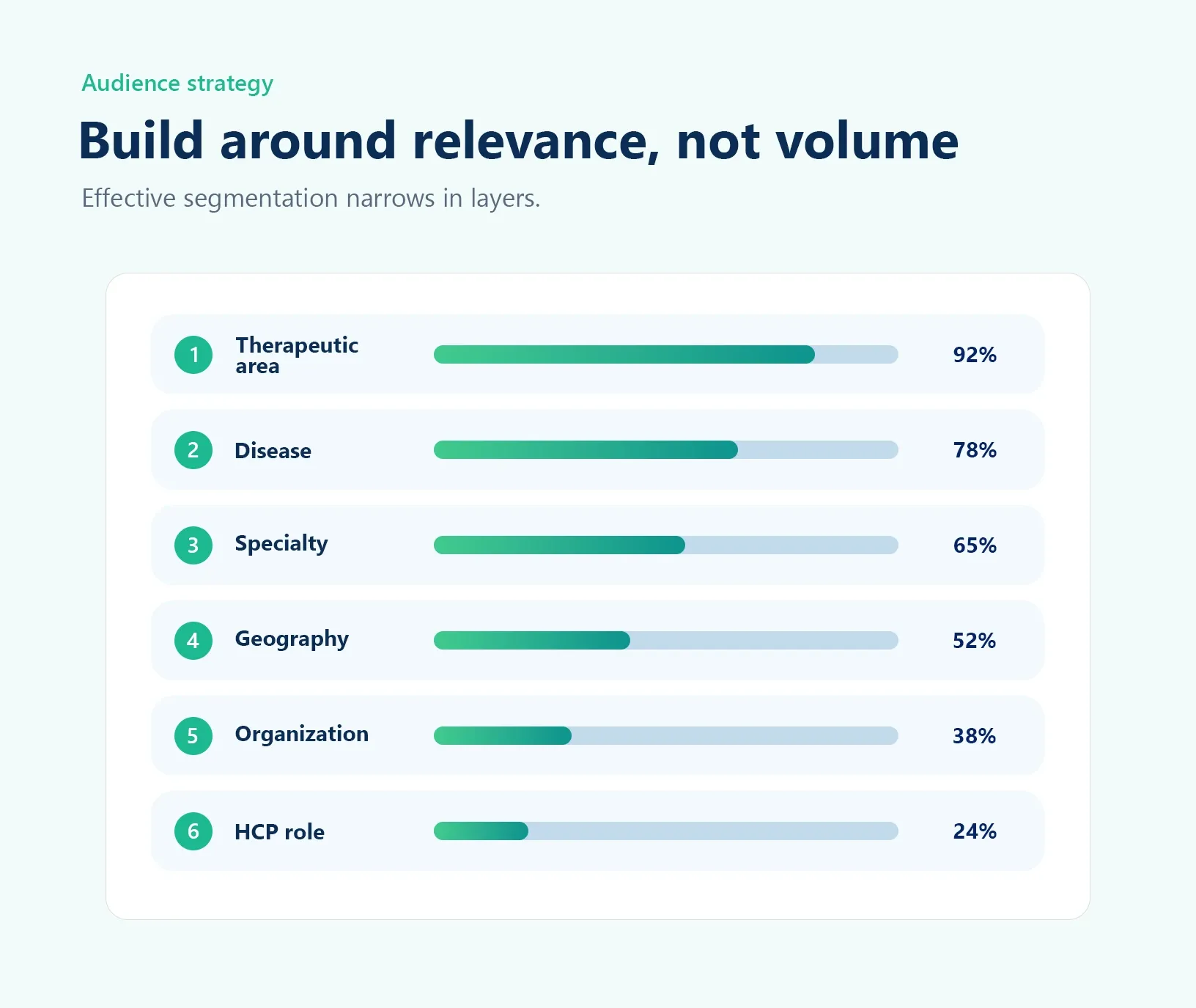
Effective segmentation starts broad and narrows with intent: begin with the therapeutic area, then refine by disease, specialty, geography, organization, and HCP role.
Each layer sharpens the picture of which professionals genuinely intersect with the condition, not just those adjacent to it.
This is where healthcare data adds real value. Not every physician within a specialty is equally relevant to a rare disease campaign.
The right data helps healthcare marketers organize HCPs and organizations around what actually matters: disease familiarity, patient volume, institutional affiliation, and trial involvement.
The objective was never list size. It's list precision: building an audience that mirrors the actual people and organizations shaping the rare disease's care pathway, aligned to what the campaign is trying to achieve.
Final Thoughts
A traditional HCP list tells rare disease marketers who exists. A smarter audience strategy tells them who matters, why they matter, and where they fit into the patient journey.
These diseases are managed by a small, highly specialized pool of physicians often concentrated at academic medical centers, tertiary care hospitals, or specialty clinics, not the thousands of general practitioners who treat more common conditions.
Reaching the right HCPs in rare disease outreach isn't about casting a wider net; it's about casting a smarter one. MedicalProspects helps you pinpoint the physicians and organizations who actually shape a rare disease's care pathway, so every outreach counts. Ready to build a relevance-first audience?
Get in touch with MedicalProspects today.
Frequently Asked Questions (FAQs)
How do you target physicians for rare disease drugs?
Start with the therapeutic area, then narrow by disease, specialty, geography, organization, and HCP role. From there, layer in patient-journey context, diagnosis, referral, treatment, or ongoing care, since a physician's relevance often depends on where they sit in that journey, not their title alone.
How can you identify rare disease specialists?
Look beyond specialty listings to disease-specific signals: KOL status, published research, clinical trial involvement, and institutional affiliation with recognized rare disease treatment centers. These signals typically indicate deeper disease relevance than a specialty tag alone.
What is the best approach to rare disease HCP segmentation?
Segment in layers: specialty, role in the patient journey, geography, organization, and disease relevance rather than relying on any single criterion. The goal is to build a picture of who influences diagnosis, referral, and treatment, not just who holds the right credential.
How can pharmaceutical companies improve rare disease physician outreach?
Tailor outreach to the HCP's actual role and level of disease involvement, rather than treating every physician in a specialty the same way. A referring primary care physician and a treating specialist need different messaging, timing, and depth of clinical detail.
What should a rare disease drug launch strategy include?
A clear view of the target audience (identification and prioritization), disease education tailored to each HCP's role, referral network mapping, and coordinated outreach that begins well before launch and continues through it.
What role does healthcare data play in rare disease commercial strategy?
It shifts targeting from volume to relevance, helping marketers prioritize HCPs and organizations based on disease familiarity, patient volume, institutional affiliation, and trial involvement, rather than specialty alone.
Ready to Target Verified Rare Disease Specialists?
Connect directly with verified key opinion leaders, treating specialists, and multidisciplinary healthcare teams with our NPI-verified datasets.
Get a Custom Provider Count →
John Britton
VP of Marketing, MedicalProspects
John works with healthcare sales and marketing teams on precision targeting, campaign strategy, and audience intelligence solutions at MedicalProspects.
Related Insights